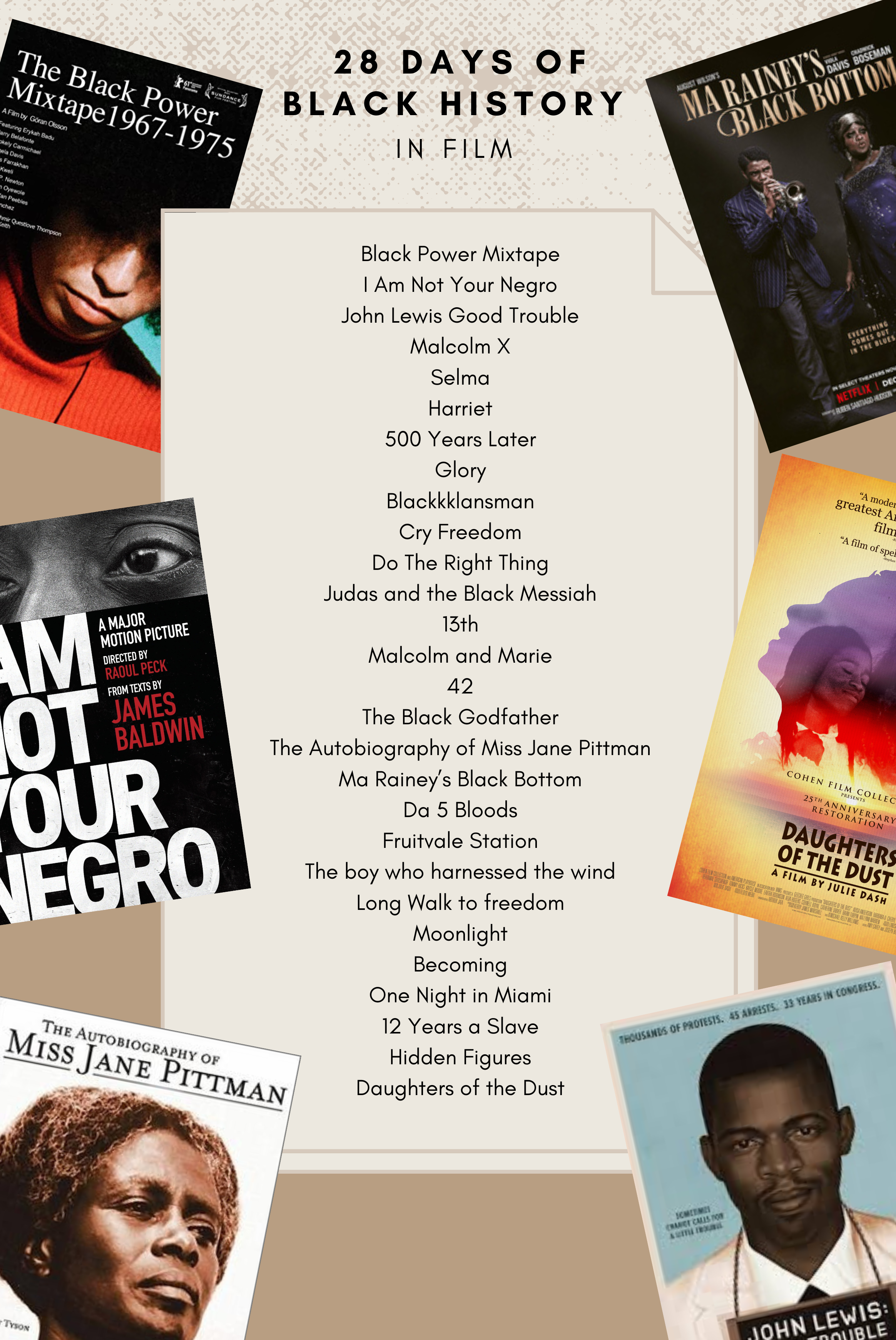
28 Days of Black History in Film
Hey there! It’s been a while since I’ve been on the blog but excited to say HAPPY BLACK HISTORY MONTH!
One of my favorite things to do is chill and watch movies with my personal person or snuggled in my bed on a rainy day, so with the help of my personal person, we created a film watchlist for this black history month, of some dope films for you, your family and friends, and whoever else sees the list to dive into some incredible stories and informative documentaries.
Here’s what’s on my 2021 BHM Film Watchlist:
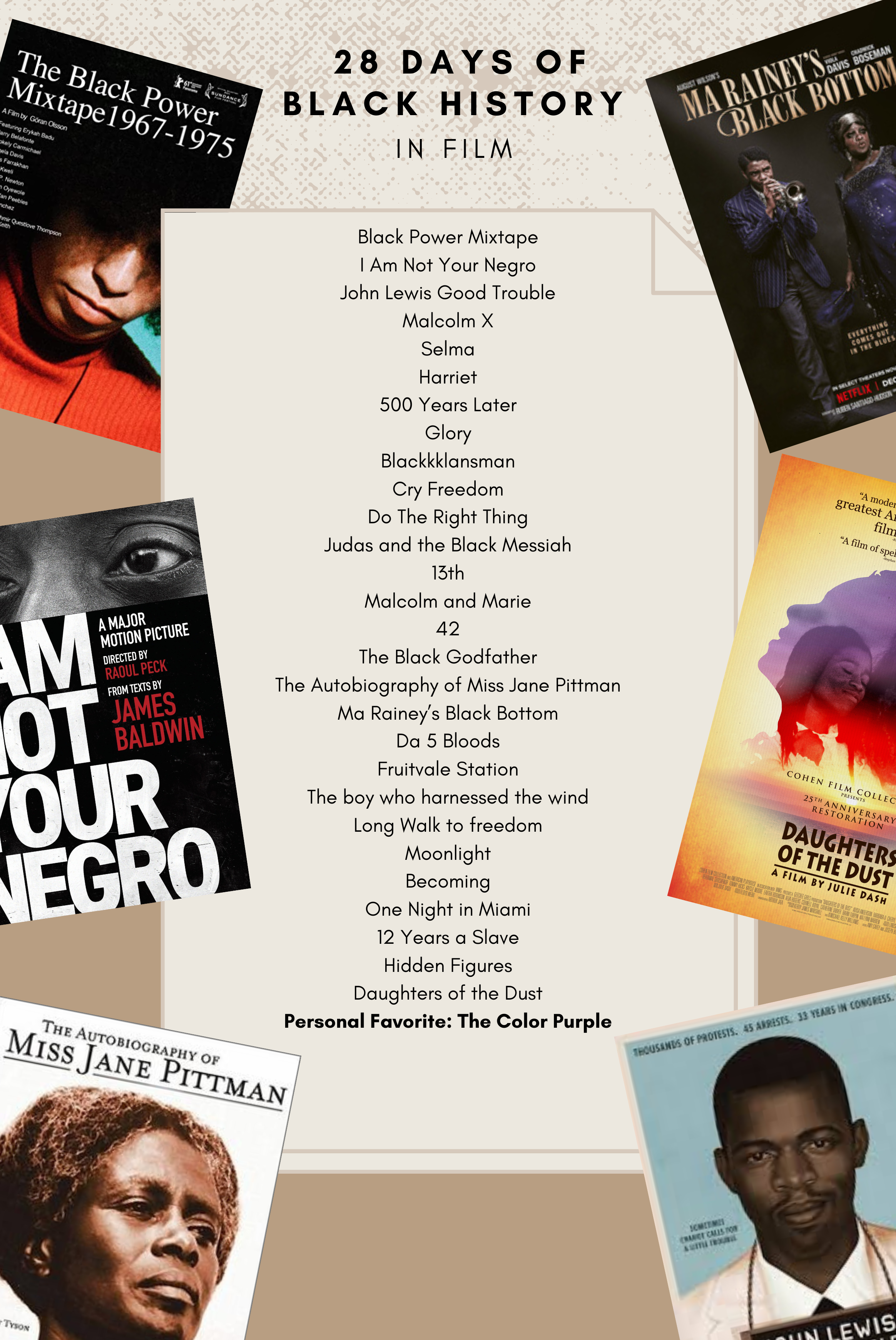
Black Power Mixtape
I Am Not Your Negro
John Lewis Good Trouble
Malcolm X
Selma
Harriet
500 Years Later
Glory
Blackkklansman
Cry Freedom
Do The Right Thing
Judas and the Black Messiah
13th
Malcolm and Marie
42
The Black Godfather
The Autobiography of Miss Jane Pittman
Ma Rainey’s Black Bottom
The Great Debaters
Fruitvale station
The boy who harnessed the wind
Long Walk to freedom
Moonlight
Becoming
One night in Miami
12 Years a slave
Hidden Figures
Daughters of the Dust
Personal Favorite: The Color Purple
Enjoy this black history month by watching films on the stories, experiences, and triumphs of black folks. Sending much love light and peace to all!
Bleed Boo. Period.
This morning I had to go back and listen to one of my favorite poets Dominique Christina recite The Period Poem, since my period came and I was feeling like WHY ME?!. Let me just say, if you menstruate LISTEN to this. It always lifts me up during this time of the month. Listen Below…
Here are the lines that stood out and resonated with me the most:
The sudden grief all young girls feel after the matriculation from childhood, and the induction into a reality that they don’t have to negotiate, you and your disdain for what a woman’s body can do.
I never realized just how much shame women can feel about their periods or even myself. At one point I remember not wanting guys to know I was on my period, or feeling weird at check-out when I had to buy pads or tampons and the cashier was a guy. Society has always wanted women to feel ashamed about this process that is apart of who we are even through the ways that they market menstrual products. That’s why I’m so excited for women now coming into the feminine care space and starting businesses for women by women. Dominique tells us here we don’t have to deal with anyone who doesn’t honor what our bodies can do although we all have felt this grief.
The feminist politic part, is that women know how to let things go, how to let a dying thing leave the body, how to become new, how to regenerate, how to wax and wane, not unlike the moon and tides…
This was probably one of my FAVORITE lines. When I think about God I think about women because of the unimaginable be things that we can do. And to think about this idea of releasing and regenerating is such a great way to think about our periods because that is exactly what we are doing when we bleed. Weakness has always been associated with women because they say we are emotional beings. But there is power in one’s ability to cry, it’s one of the best forms of release. And our periods help us to remain in touch with this ability to release. When she said this I was like YESSSSSS!
Women have vaginas that can speak to each other and by this I mean, when we’re with our friends, our sisters, our mothers, our menstrual cycles will actually sync the fuck up. My own cervix is mad influential, everybody I love knows how to bleed with me.
I always thought this was one of the most fun and fascinating things about women’s periods. Because there have been so many times when I would be with my girlfriends and one of us is like dang my period just came yesterday and then the other is like dang mine came on today and we can laugh and complain about it together. Sometimes is the best feeling that someone else at least understands you. Just think about this too; anytime you’re out in public and your period comes and you shoot that text your homegirl like, “ Hey you got a pad?” if they don’t have it not them best believe they’re going to find somebody close by that does. We bleed together!
But when your mother carried you, the ocean in her belly is what made you buoyant, made you possible. You had it under your tongue when you burst through her skin, wet and panting from the heat of her body, the body whose machinery you now mock on social media, that body, wrapped you in everything that was miraculous about, and then sung you lullabies laced in platelets, without which you wouldn’t have no Twitter account at all motherfucker.
THIS. THIS. THIS. All I have to say is women should be REVERED because we make life possible. Any man who doesn’t honor, respect, and understand this about you doesn’t deserve your time, space, or energy. PERIOD.
It interrupts our favorite white skirts, and shows up at dinner parties unannounced, blood will do that, period. It will come when you are not prepared for it; blood does that, period. Blood is the biggest siren, and we understand that blood misbehaves, it does not wait for a hand signal, or a welcome sign above the door. And when you deal in blood over and over again like we do, when it keeps returning to you, well, that makes you a warrior.
WHEW! When sis hit me with this one I was a mess, okay. I was reminded that I am a warrior even when it doesn’t seem or feel like it and YOU ARE TOO. Remember it. Claim it. Drive your stake into the ground. Mark your territory, be lioness and roar as loud as you can.
Etymologically, bless means to make bleed. See, now it’s a lesson in linguistics. In other words, blood speaks, that’s the message, stay with me. See, your daughters will teach you what all men must one day come to know, that women, made of moonlight magic and macabre, will make you know the blood. We’re going to get it all over the sheets and car seats, we’re going to do that. We’re going to introduce you to our insides, period and if you are as unprepared as we sometimes are, it will get all over you and leave a forever stain.
I often talk about how I feel that sometimes as women we forget the power and influence that we have in the world and the people closest to us. It may be our friends, a spouse, our children. We have a way of leaving that forever stain both literally and figuratively. What kind of stain will you leave?
Should any fool mishandle that wild geography of your body, how it rides a red running current like any good wolf or witch, well then just bleed, boo. Get that blood a biblical name, something of stone and mortar. Name it after Eve’s first rebellion in that garden, name it after the last little girl to have her genitals mutilated in Kinshasa, that was this morning. Give it as many syllables as there are unreported rape cases. Name the blood something holy, something mighty, something unlanguageable, something in hieroglyphs, something that sounds like the end of the world. Name it for the war between your legs, and for the women who will not be nameless here. Just bleed anyhow, spill your impossible scripture all over the good furniture. Bleed, and bleed, and bleed on everything he loves, period.
PERIOD!!!!!! This was the one for me. This closing reminded me that I needed to bleed with PRIDE for the magnificence and light that I will bring to this world.
Yesterday I started my period. I was like man, on the first day of the new month TOO! For so many women that I know and share the experience of menstruating with it is never the happiest time of the month for us. However, for me when I am menstruating I try to use that time to take care of myself the best way I can. I always become deeply introspective during my period. I listen to my body when she feels tired or feels pain. I cry if the cramps hurt me too badly. I eat chocolate because every sweet morsel makes me feel better about the world. I do this because I deserve it, PERIOD.
I hope this piece inspired you because it ALWAYS inspires me. Much love to Dominique for putting this out into the world for her baby girl and all the other nameless dummies on Twitter.
#BlackWomeninBullCity | Joyce Nichols
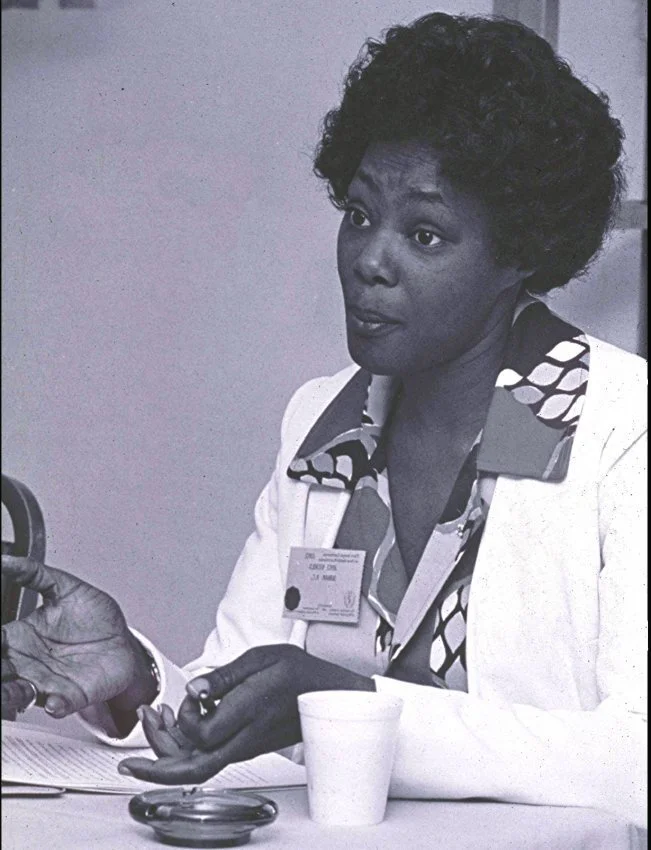
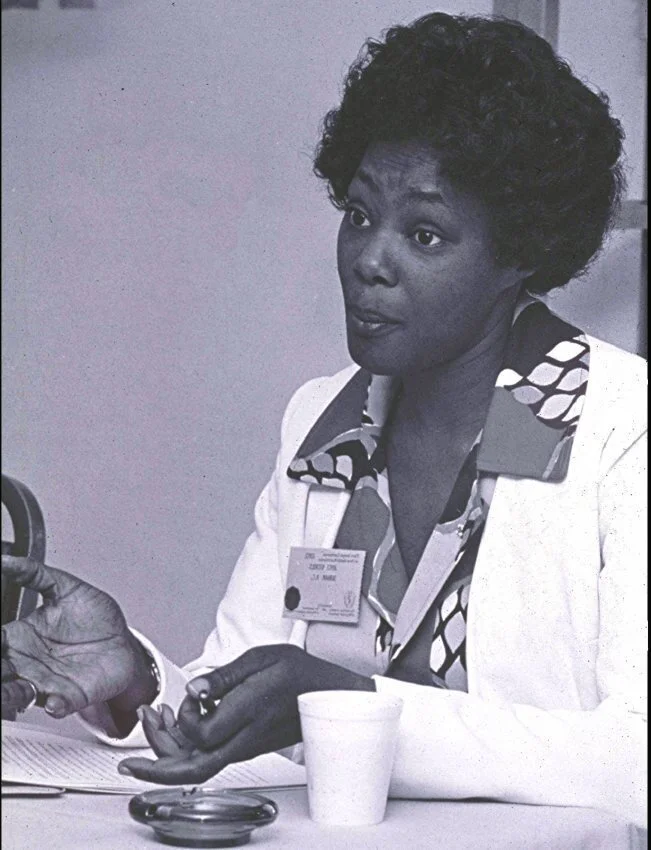
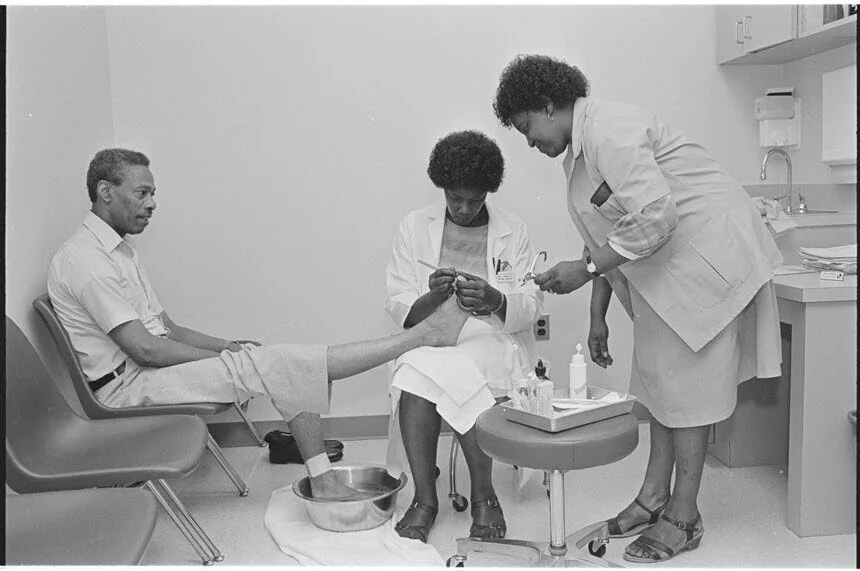
Hey Friends! What a wonderful week this has been. I'm excited to share a bit about Ms. Joyce Nichols. She was originally from Roxboro, NC, but came to Durham to pursue a degree at what was then called, Carolina College, now known as North Carolina Central University. She was unable to complete her schooling at NCCU due to finances. Nichols later earned a scholarship to study and become a licensed practical nurse at the Durham Technical Institute. She was working at Duke Hospital when she got word of the Physician Assistant program at Duke. Nichols had become well acquainted with ex-corpsmen who would come into the cardiac care unit to work until the fall Physician Assistant's program. The admissions committee was skeptical about admitting her to the program, being that she lacked corpsmen experience and was a mother taking care of a family.
A woman, African American, working-class, a mother, and little money to cover her education…
The odds were against her, but she persisted and won the faculty over and became the first woman to be formally educated as a physician assistant. While it was academically challenging for her, she rose from next to last to be in the top 50% of the class. She became the first PA to be trained in the cardiology subspecialty. Nichols was even elected as the vice president of the class by her all-male class.
Part of her story that made me smile is that she says she owed so much of her gratitude towards her second husband, who supported her and took on more child-rearing so that she could study. During her first year in the program, her house burned to the ground, and she and the family lost everything they had, but her Duke classmates hosted a dance to raise money and replace all the things they had lost in the fire.
Nichols was the first African American person to serve on the American Academy of Physician Assistants board. She established the AAPA Minority Affairs Committee. In an interview with the Rocky Mount in 1970, she stated
"The first year when I finish I want to spend working in the ghetto."
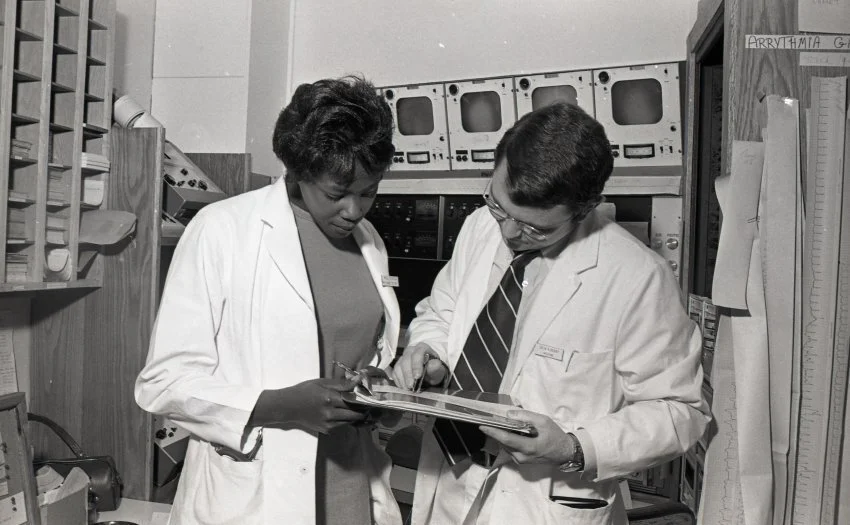
She collaborated with Dr. Charles Johnson, the first black physician, apart of Duke faculty, to secure funds and establish the first rural satellite health clinic in North Carolina and the country. As funding became scarce, she would move on to Lincoln Community Health Center, formerly known as Lincoln Hospital, which was the only hospital in Durham for blacks. She served there until she retired in 1995. May we be inspired by Mrs. Joyce's story and her persistence in advocating for minorities in the medical industry and addressing the health disparities that existed in the Durham community amongst blacks and the surrounding areas.
Some of her other accomplishments and work include:
Nichols helped found and served on the Board of Directors of the North Carolina Academy of Physician Assistants.
Preceptor and adjunct faculty member of the Department of Community and Family Medicine
Duke University PA Alumni Hall of fame in 2002 for her concerns for poor people and her advocacy skills.
Commissioner to the Durham Housing Authority winning many legal concessions for tenants.
Member of the Board of Directors of the Durham County Hospital Corporation and the Lincoln Community Health Center.
1991 Nancy Susan Reynolds Award for Advocacy
1996 she was named the AAPA Paragon “Humanitarian of the Year.”
Resources:
Shestak, Elizabeth (2012-08-27). "She Led Way Beyond Nursing to PA Work". The News and Observer. pp. B1. Retrieved 2020-05-14 – via Newspapers.com. and "Nichols". The News and Observer. 27 August 2012. Retrieved 14 May 2020 – via Newspapers.com.
Sigler, Joe (1970-07-21). "Duke's First Woman Physician's Assistant Had One Stumbling Block - Her Sex". Rocky Mount Telegram. p. 7. Retrieved 2020-05-14– via Newspapers.com.
Carter, Reginald (August 2012). "Joyce Nichols, PA-C". Physician Assistant History Society. Archived from the original on 24 March 2017. Retrieved 2020-05-15.

#BlackWomeninBullCity | Pauli Murray
““It has taken me almost a lifetime to discover that true emancipation lies in the acceptance of the whole past, in deriving strength from all my roots, in facing up to the degradation as well as the dignity of my ancestors.” Pauli Murray ”
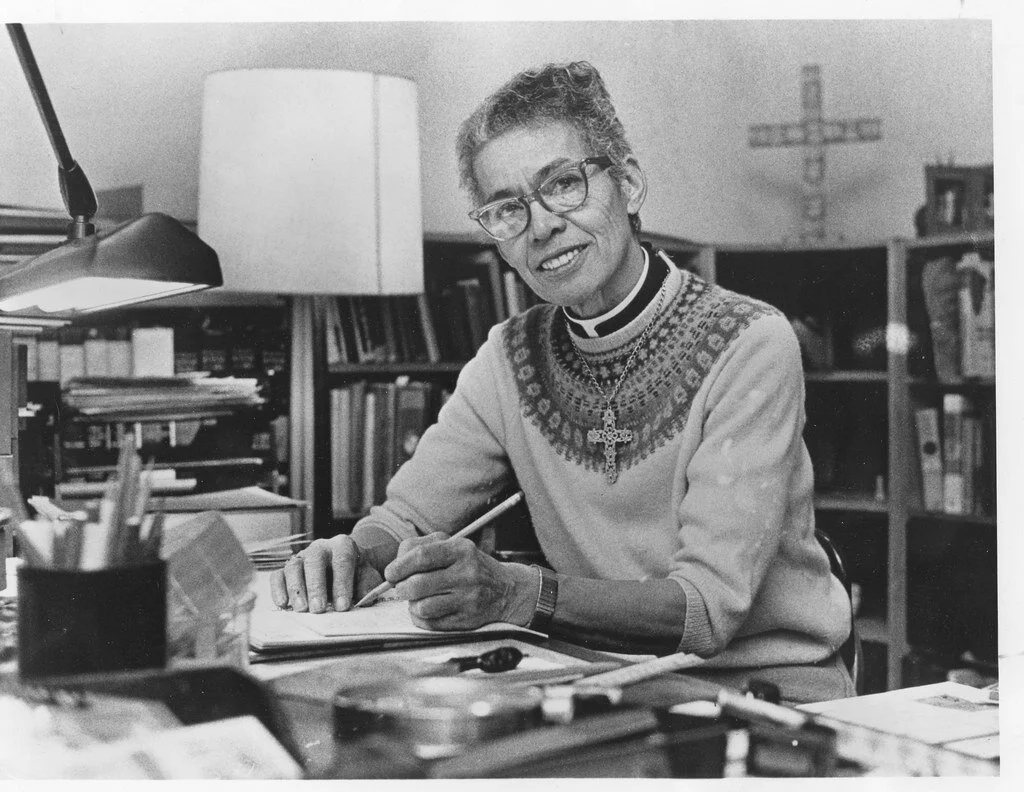
I hope the stories that I've been sharing of women from Durham have been enlightening and insightful for those of you reading. As much as you may think that I have known these women my entire life, the reality is that I have not. I had never heard of any of them. I found myself somewhat disappointed that having been raised in Durham and also educated in the Durham Public School system, I never received a thorough education in Durham's history and the people and their impact aside from knowing about Black Wall Street. However, I'm grateful to possess the historical and intellectual curiosity about my history that inspired me to begin this journey of discovering more about my roots. This week I'm back with a brief post about an exceptional woman that I found in my readings, and her name is Pauli Murray. Ms. Murray was a poet, activist, attorney, professor of law, and the first African American woman to become an Episcopal priest. What I found so striking about her story is that Ms. Murray was not born in Durham but moved to what she had called a "frontier town" at the age of three from Baltimore in 1914. She grew up in her grandfather Fitzgerald's home on Carroll Street. She attended West End School, which she explicitly recalls being one of her earliest realizations that what they received as negro children was different from that of the white children. Stating that "it wasn't the hardships that hurt but rather the contrast between what we had and what the white children had.
“ I'll never forget West End School. It was a rickety old wooden built building with the paint peeling; I can see those scales now. You know how wood or shingles or paint blisters and I can see it. When there was a wind in a storm, you could just hear the wind blowing through that old building. I think that it was a two storey building, it might have been a three storey building, but anyway … And of course, the white kids school, a nice brick school sitting in a lawn surrounded by a fence. West End was up on a sort of clay, barren ground. There was no lawn whatsoever. It just sat on clay. The fact that I can remember this today and I can see that old school building there, no swings, nothing to play with when you went out …”
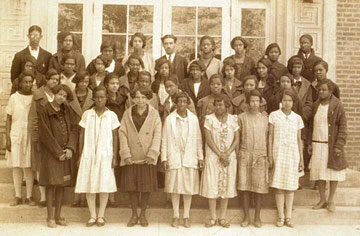
1926 Hillside High School
From an early age, she had a disdain for segregation, and all she wanted was to get away from it. Murray attended Hillside High School, formerly known as Hillside Park High School. She graduated from Hillside with a certificate of distinction. She would later attend Hunter College in NYC, although she had received a scholarship to Wilberforce University she did not want to attend any segregated schools.
“When I graduated from high school with honors, the Wilberforce Club got together and bestowed a scholarship upon me to go to Wilberforce and I turned it down.
…No more segregation for me. I was fifteen, but that I knew.”
Perhaps one of Pauli's most significant events was her 1938 campaign to enter into UNC-Chapel Hill's graduate program, where she was denied admission solely based on race. It received public attention, and she had sent off a letter to President Roosevelt, and although he did not respond, Eleanor Roosevelt did. The two would develop a long-standing relationship.
They sent me an application blank and they had written into the printed application blank, race and religion. This has been typed in so that it stands out apart from a normal form. I think I answered it but may have said, "But what difference does it make?" Obviously tongue in cheek. In due course, I got back a letter from Dr. Frank Graham, who was the then president of the University of North Carolina, saying, "I'm sorry, but the constitution and the laws of the state of North Carolina prohibit me from admitting one of your race to the law school.
This event was followed by Murray’s involvement to desegregate public transport, which resulted in her being arrested in March of 1940 on a bus ride from Washington to Durham and subsequently being convicted for resisting segregation on an interstate bus. Murray says:
They charged us with creating a disturbance, breaking the segregation law, violating the segregation law and creating a disturbance.
A year later, she would attend Howard University School of Law and later became a field secretary of the Workers Defense League concerning the case of Odell Waller, a black sharecropper convicted of first-degree murder of his white landlord by a white poll tax jury. She would also go on to help in a collaborative effort to form the Congress on Racial Equality. After working in the field of law for some time and serving her community in the fight for racial equality, she sought out a degree in law at Harvard, is that she had been awarded a fellowship, but they denied her entrance because of her sex. But it was actually at Howard that Murray says marked the beginning of her conscious feminism and awareness of sex and gender discrimination.
In 1956 Murray published Proud Shoes: The Story of an American Family, a biography of her grandparents, and their struggle with racial prejudice and a poignant portrayal of her hometown of Durham. It’s important to note that Pauli identified her self as a civil libertarian and person who was committed to advancing human rights wherever she went. During her time in Accra, Ghana, while serving as a senior lecturer at the Law School. Out of her experience in Accra, came a book that she co-wrote entitled, The Constitution and Government of Ghana. When she returned, she would be appointed by President John F. Kennedy to his Committee on Civil and Political Rights. While Murray worked closely with several prominent black male civil rights leaders, including Dr. Martin Luther King Jr. and Philip Randolph. She grew tired of the blatant dismissive attitude many of them had towards negro women and their role in advancing our rights in the fight for freedom. In 1963 she wrote to Randolph saying “been increasingly perturbed over the blatant disparity between the major role which Negro women have played and are playing in the crucial grass-roots levels of our struggle and the minor role of leadership they have been assigned in the national policy-making decisions.” Before she passed, Pauli Murray’s final accomplishment was In 1977, when she became the first African American woman to become an Episcopal priest.
Today you can see murals of Pauli Murray as part of the Face Up: Telling Stories of Community Life, a collaborative public art project in Durham, North Carolina. Artist, Brett Cook, led it.
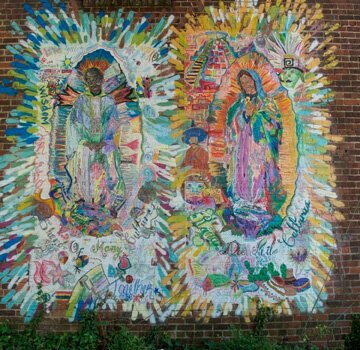
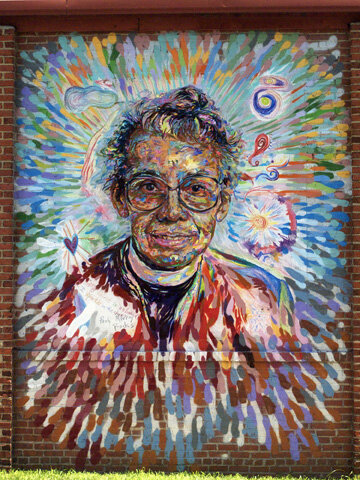
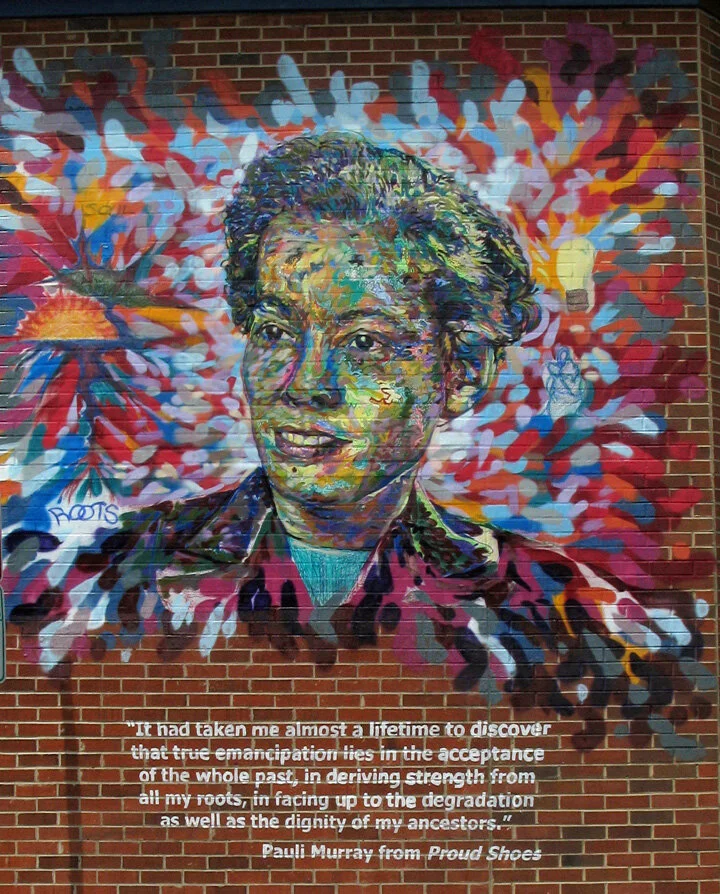
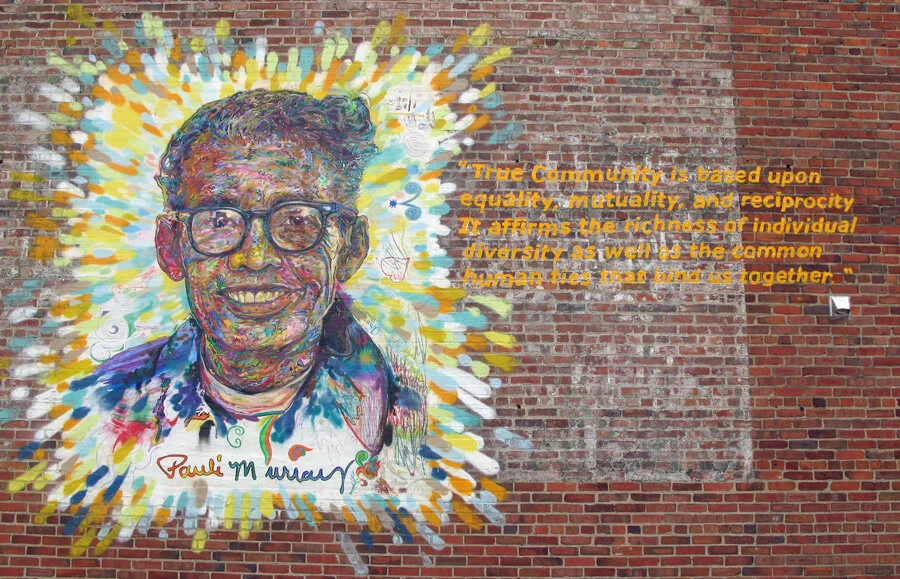
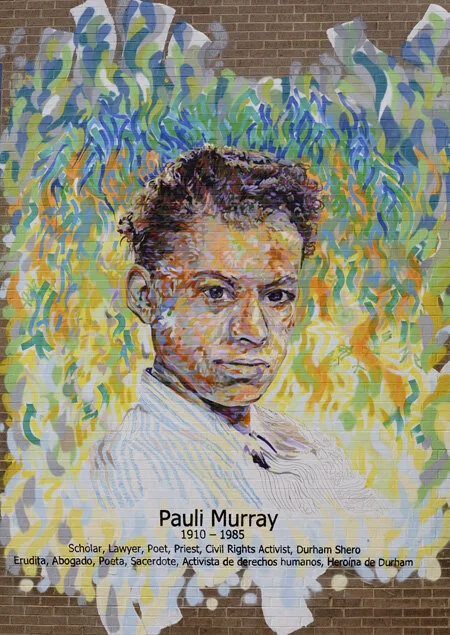
One thing I’ve grown to admire about Pauli Murray through my research on her life’s work is her undeniable resiliency and persistence in the pursuit of her own freedom. She did not back down no matter what stood in her way. She was so progressive for the time in which she lived. Pauli Murray had truly emancipated her mind and was determined to not accept an inferior position in this world because of the color of her skin or the fact that she was a woman. If you’d like to read more about her or read her work please check out some of the resources below.
Thanks for reading and learning with me!
Love Light and Peace.
Sources:
Our Separate Ways by Christina Greene
Interview with Pauli Murray, February 13, 1976.
Interview G-0044. Southern Oral History Program Collection
https://docsouth.unc.edu/sohp/G-0044/G-0044.html
https://paulimurrayproject.org/
Pauli Murray’s Writing’s:
“An American Credo.” Common Ground 5, no. 2 (1945): 22-24.
“And the Riots Came.” The Call, Friday, August 13 1943, 1; 4.
“A Blueprint for First Class Citizenship.” The Crisis 51 (1944): 358-59.
Dark Testament and Other Poems. Norwalk, CT: Silvermine, 1970.
Human Rights U.S.A.: 1948-1966. Cincinnati, Service Center, Board of Misions, Methodist Church, 1967.
“Negro Youth’s Dilemma.” Threshold, April 1942, 8-11.
“Negroes Are Fed Up.” Common Sense, August 1943, 274-76.
Proud Shoes: The Story of an American Family. New York: Harper & Row, 1978.
“The Right to Equal Opportunity in Employment.” California Law Review 33 (1945): 388-433.
“Roots of the Racial Crisis: Prologue to Policy.” J.S.D., Yale University, 1965.
Song in a Weary Throat: An American Pilgrimage. New York: Harper & Row, 1987.
States’ Laws on Race and Color. Cincinnati: Women’s Division of Christian Service, Board of Missions and Church Extension, Methodist Church, 1951.
“Three Thousand Miles on a Dime in Ten Days.” In Negro Anthology: 1931-1934, edited by Nancy Cunard, 90-93. London: Wishart and Co., 1934.
“Why Negro Girls Stay Single.” Negro Digest 5, no. 9 (1947): 4-8.
Murray, Pauli, and Henry Babcock. “An Alternative Weapon.” South Today, (Winter 1942-1943): 53-57.
Murray, Pauli, and Mary O. Eastwood. “Jane Crow and the Law: Sex Discrimination and Title Vii.” George Washington Law Review 34, no. 2 (1965): 232-56.
Murray, Pauli, and Leslie Rubin. The Constitution and Government of Ghana. London: Sweet and Maxwell, 1964.
#BlackWomenInBullCity | Doris Lyon
Leading up to World War II, racial tension was rising in and across the south between black and white people. One area where it was a continuous struggle when it came to the sharing of public spaces, in particular transportation. Black women were the ones to challenge Jim Crow practices within the transportation sector because the majority of the reliable on bus transport to get to their domestic jobs. During this time in Durham, the racial hostility and disharmony on public transportation had become so bad that chairman of the state utility commission complained to the then Governor Broughton stating that
Durham is one of the worst places we have, due to the large negro population, and to the fact that there are many northern Negro soldiers at Camp Butner and also northern white officers who do not agree with our segregation laws and encourage the negro soldiers to violate them.
He added that it was "utterly impossible" for bus drivers and police in Durham to "to enforce segregation laws saying that "we have already had some open trouble there, and I apprehend that we will have more. It is a bad situation". There were many southern blacks who believed any aggressive or direct action would provoke white rage, with the ongoing hostility many grew dissatisfied with segregation, and protests and demonstrations became more widespread. In 1938 Ellen Harris, a Durham woman brought a case against the local bus company when a white male passenger demanded that she move to the back of the bus. The Durham NAACP failed to take her case. However, the court ruled in her favor ruling that she had not broken violated the Jim Crow laws not that segregation was unconstitutional.
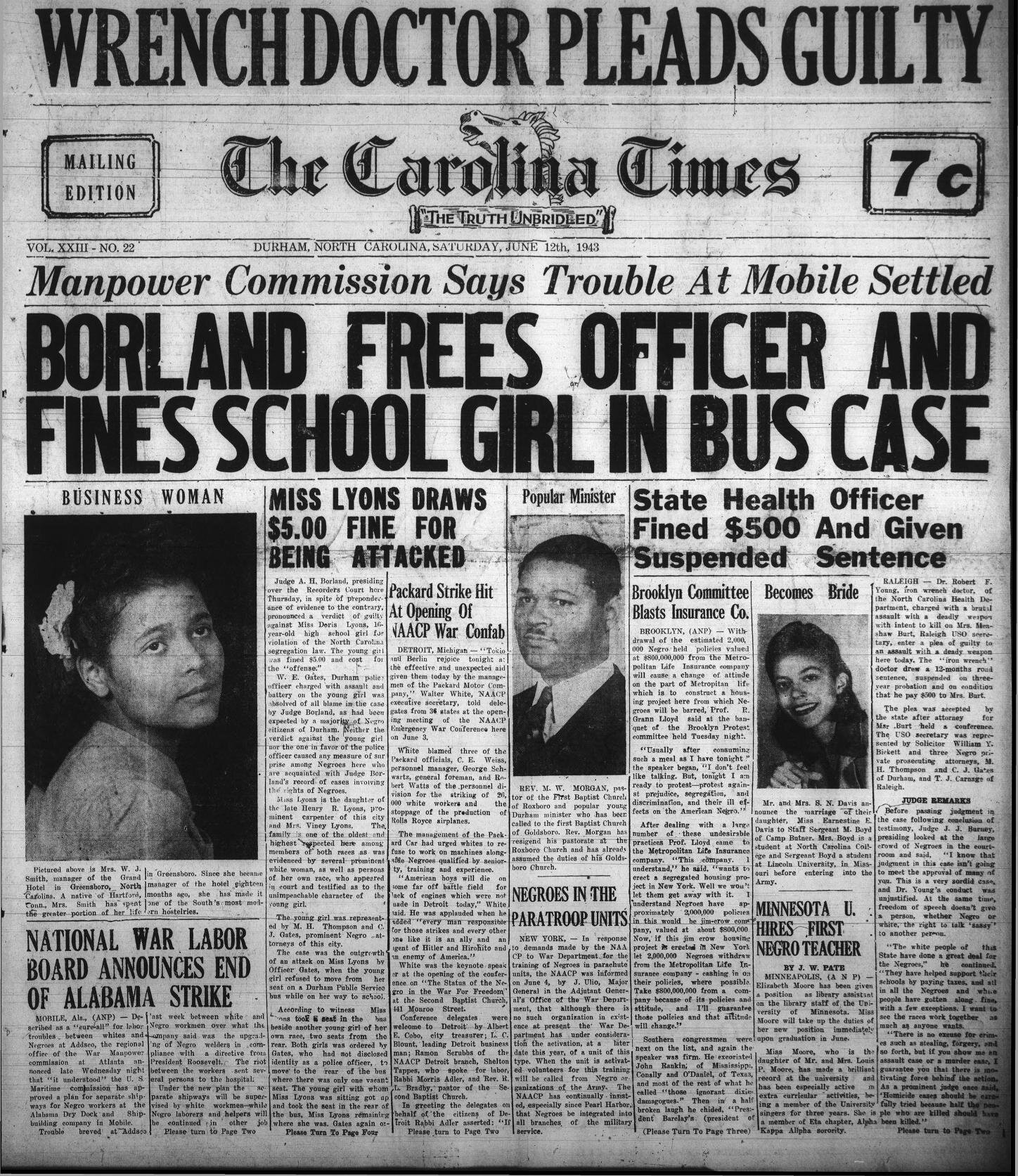
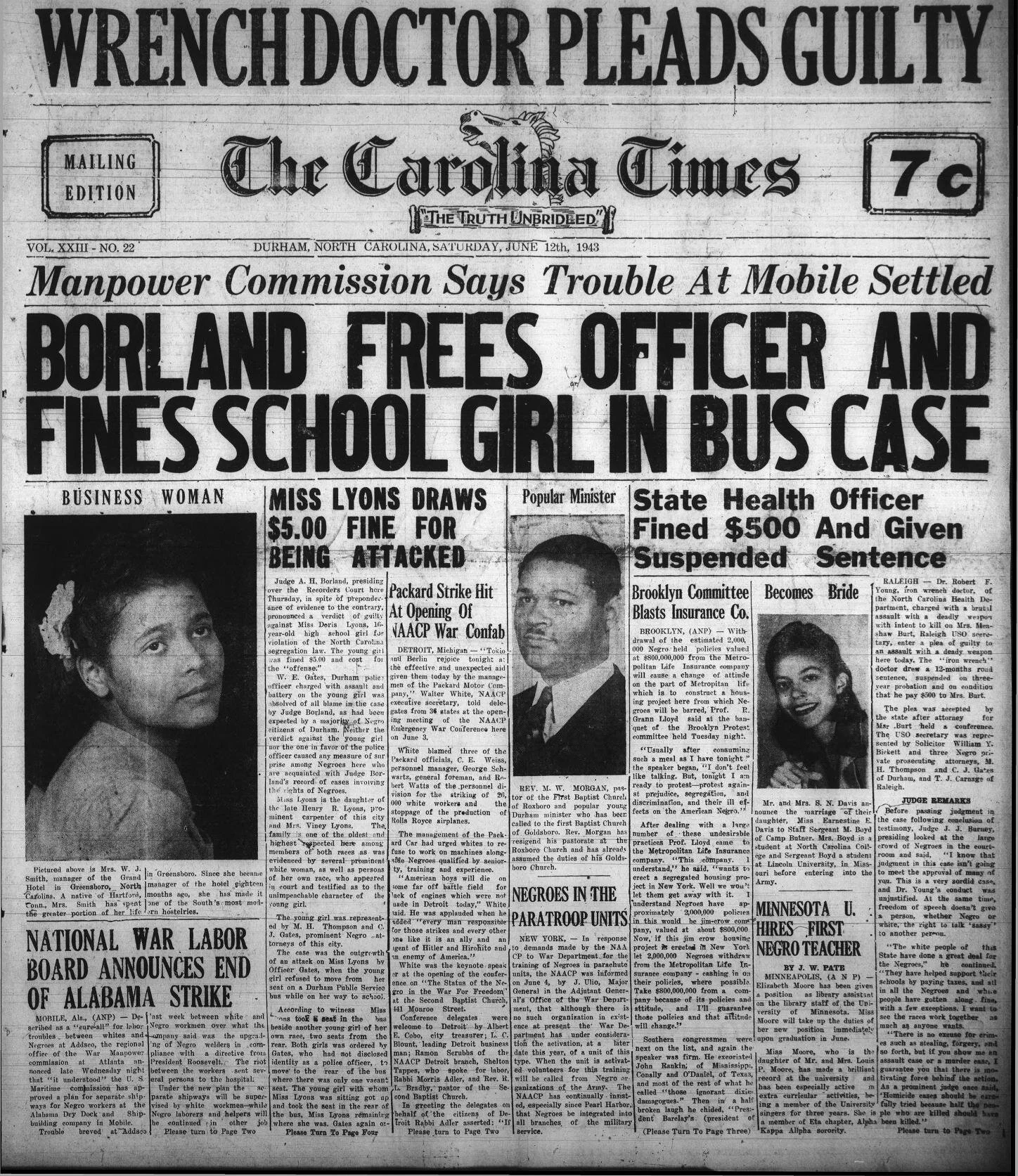
NC Digital Library
In 1943 Doris Lyon had refused to move to the back of the bus and was subsequently assaulted by a white police officer. She reportedly struck this police officer after he had tried to remove her from her seat on the bus forcibly. However, in court, there were esteemed white women who appeared in court and vouched for Doris' "unimpeachable character." Black leadership in Durham had rallied behind her as well, but Doris was still found guilty of assault and battery. Additionally, she was fined for breaking north Carolina's segregation law. No action was ever brought against the police officer who assaulted her. Individual acts of resistance and defiance, like Doris' story, is what led to building collective conscious and more organized protests in opposition against the discrimination and segregation that black people faced during this time. In 1938 a few years prior, a Durham woman brought a case against the local bus company when a white male passenger demanded that she move to the back of the bus. The Durham NAACP failed to take her case. However, the court ruled in her favor ruling that she had not broken violated the Jim Crow laws not that segregation was unconstitutional.
Sources:
A Song in a Weary Throat by Pauli Murray
Our Separate Ways by Christina Greene
Picture: http://newspapers.digitalnc.org/lccn/sn83045120/1943-06-12/ed-1/seq-1/print/image_665x817_from_1001%2C1396_to_3339%2C4268/
#BlackWomeninBullCity | Ann Atwater
Since beginning my journey to research and learn more about black women from Durham, I have found myself deeply moved by their tenacity and persistence in the fight for justice for our people. I’m a believer that your roots control your fruits and learning more about my hometown, and the rich history and legacy that is there give me something to hold onto as I’m going through my journey as a young black woman striving to achieve her wildest dreams.
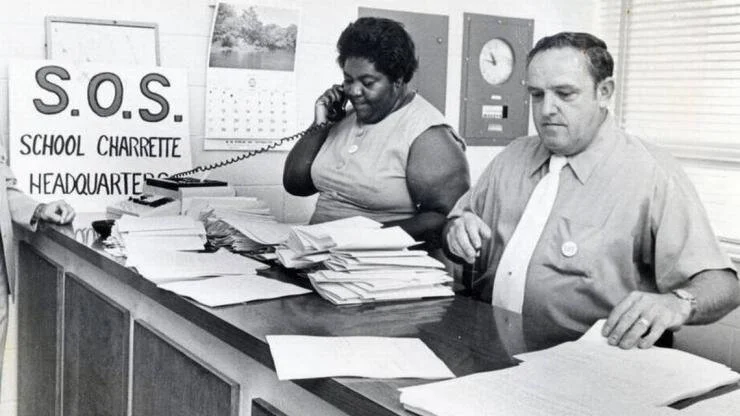
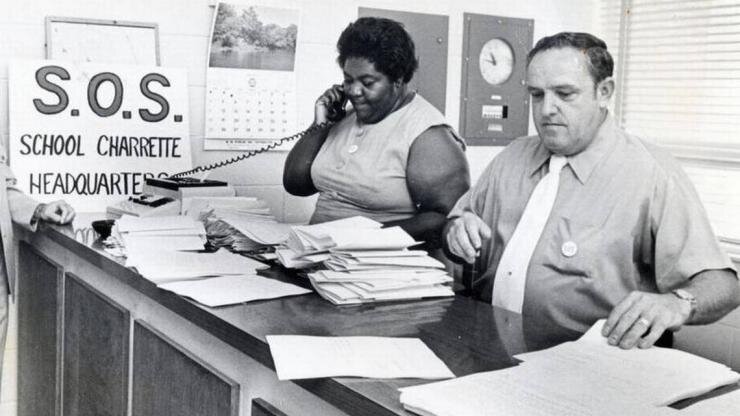
Photo from the University of North Carolina Chapel Hill Libraries
This week I will be sharing a little bit about Ann Atwater originally from Columbus County, NC. She came to Durham in 1950. Her husband and one child were sharing one room with two beds that was occupied by another man. They moved around a lot living in substandard housing and ended up living with a woman sleeping on a small couch while pregnant with her second child. While pregnant with her second child, her husband then left her to go to Richmond, VA. But Ann persevered and was able to move out and get a two-bedroom apartment of her own, doing domestic work, and she was paying $6 a week for rent. She was working for white women cleaning her house for 30 Cents an hour.
And she was naked that morning, I went up and the mailman, the milkman and I both came up at the same time, and she was screaming, and so I told him, I wasn’t going in there, he said he wasn’t either, he just set the milk down and left. And I turned around and I left so I wouldn’t go back any more, because I didn’t know what was wrong with her.
Ann was able to get the assistance of $57 a month for her and her two girls from the Department of Social Services. That was just enough for bills but only some basic living needs. Ann says,
“ They didn’t allow me to have a television at that time, and so I made a, trying to pay my bills with that $57 a month, and we would have, we would eat like rice and maybe I’d take fried fatback and take the gra-, take flour and make gravy, and we’d have rice and gravy and fatback like today and tomorrow I’d probably cook a cabbage and then Wednesday I would have the rice, cabbage, whatever was left over we ate, that’s the way I fed the children. And I used cloth bags, flour bags and rice bags, to make their clothes, to make the slips and the dresses and things out of.
Ms. Atwater, like many other poor black residents of Durham, found her self living in unsafe and unhealthy conditions. She was living on Fowler Avenue where the house had cracks along the side, and it was so poorly wired that when her lights were cut off for her inability to pay, she could just stomp on the floor and lights would come on and she would stomp again and the lights would go off; this continued for about a year. Howard Fuller, a member of the NC Fund, approached her about getting her house repaired. She took up his offer to come to the meeting about how the fund would help him organize 23 neighborhood councils. She was able to get her home repaired after Mr. Fuller had come and requested the landlord to make some repairs, but she said rent went up every time something was fixed.
Every time they would patch up something they would go up on the rent. And this is what everybody was faced with.
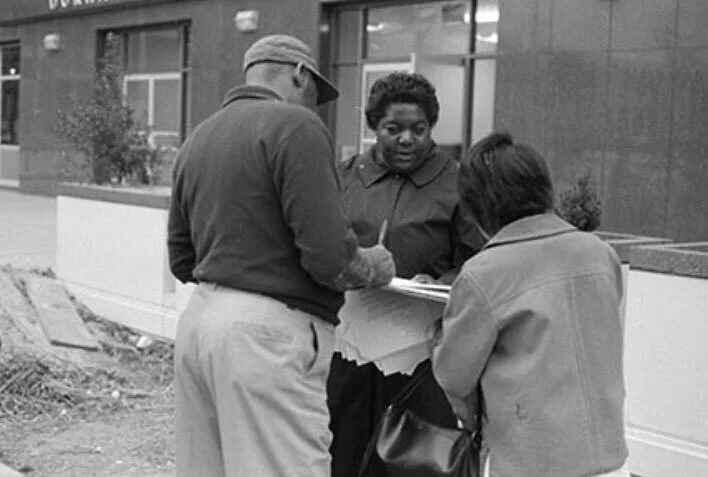
That experience empowered Ann, and after that night, she would go door to door telling people how they get the landlord to fix their homes, and she then started helping to build the neighborhood councils off of that. She was apart of the groundwork and laying the foundation for influential neighborhood councils. After going through a 17-week training program, she became a Community Action Technician, and her focus was housing. Her supervisor told her to get a picket line and have the tenant selection, and housing authority fired. She gathered about 300 people with picket signs and went marching around the housing authority’s office.
In addition to serving as a community technician, she served with Operation Breakthrough, which taught people how to register to vote and the importance of voting. She served on the board of directors of OB for seven years. After her time on the board, she began working as a social worker for the headstart program. Ms. Atwater advocated for people all across Durham, and they called her “the breakthrough woman “ because she was getting things done for people. Ms. Ann has stopped the illegal eviction of families, forced the housing authority to accept women with illegitimate children and people with police records, and stood on the belief that further ghettoization of black communities had to stop. Although she had all of this under her belt, she still had to fight to keep her job. They were willing to give away jobs to more educated people with no experience rather than someone like herself who had, for a long time, been organizing and making things happen for the blacks in Durham.
She went to North Carolina Central University and demanded that they put community work in their curriculum for the social work student to gain hands-on experience and not do this work just learning from the book. She fought against the building of the Durham Expressway, which uprooted many blacks our of their communities. Ms. Ann was also elected a the vice-chair for the democratic party but couldn’t make all the meetings and another black woman who could pay the group money to gain the position. She explains that this ability to pay their way into the room allowed them to remain in positions, whereas most poor blacks could not do that.
In 1967 Ms. Ann Atwater was named Woman of The Year for her work in the community. When the American Federation of Labor and Congress of Industrial Organizations (AFL-CIO) gave a grant to North Carolina to integrate the schools, Ms. Atwter was called on to pick up folks in the neighborhood to bring them to the meetings. Upon arrival, she was faced with dealing with Mr. C. P Ellis, a leader in the local Ku Klux Klan group trying to prevent them from coming together on integration who said:
“Them niggers ought not to be on this side of the track.” And I walked in and I said, “Well, you crackers ought not to be up here talking either.” And we started calling one nigger and cracker, and we don’t that for about 2 weeks, and we couldn’t get really anything done.
Ellis had spoken on NPR that Atwater was an" effective boycotter, making progress, and he hated her guts." Ms. Ann wrote in a column that a couple of years before joining the committee to desegregate, she nearly slit his throat at a city meeting after he repeatedly used the n-word. Luckily, her pastor was there, grabbed the hand holding the knife, and stopped her. After they were able to get over fighting with one another, they were ready to come together and start searching the schools finding out that many of them were supporting their husbands' schooling at Duke to become doctors. Many were not placed in the right classes, many who were math teachers were teaching English, and so on. White people at the time didn't want those changes. Over time and with many obstacles, they were able to integrate the schools successfully. Atwater and Ellis became friends, and after attending a charette together on the final night, Ellis renounced the Ku Klux Klan and never returned. The story of their friendship is depicted in the film, The Best of Enemies featuring Taraji P. Henson.
Ms. Ann Atwater's work in Durham to bring equality and justice to people of Durham is a model of transformational leadership by which we can all take notes from. Her story and her life's work is one of resilience, diligence, and truth. Ann Atwater is a woman who has reminded to find and use the power of my voice. This is just a peek into her life's work in Durham, and if you'd like to learn more below, I have attached some resources to learn more about her.
Sources:
https://www.schoolforconversion.org/ann-atwaterin-her-own-words
https://www.ncdcr.gov/blog/2020/01/28/activist-ann-atwater
https://www.ncpedia.org/atwater-ann-george
https://allthatsinteresting.com/ann-atwater
#BlackWomeninBullCity | Ersaline Williams & The Sojourners for Truth and Justice
This blog post was inspired by my desire to learn more about the role that black women have played in the fight for the liberation of black people everywhere from injustice. I've been able to spend more time reading more books, and I've rediscovered my love for historical literature on my people and our struggle, specifically, black women's historical writing. We can't continue fighting for justice while not reading books and literature based on the perspectives and experiences of black women. I was triggered by the story of our sister Toyin Salau who sexually assaulted and then murdered. There are many other countless stories of black women who have experienced sexual violence at the hands of men that we do and do not know. Furthermore, there have been SO many of us who have been survivors of sexual violence telling our stories but not even having the support of the black men who we defend and fight for every chance we get.
This devastates me.
I wanted to begin by gaining a firm understanding of how women from my hometown, Durham, North Carolina, also known as Bull City, organized for the sake of bringing justice to their communities. Durham was considered to be "capital of the black middle class" in the 1920s and garnered the praise of renowned leaders, Booker T. Washington and W.E.B Du Bois. It is the home of the largest black-owned financial institution in the country, North Carolina Mutual Life Insurance Company. While many of Durham's black male elite's achievements are important to note, the efforts and organizing, accomplishments, challenges, and injustices faced by black women in the City of Durham have made been invisible and overlooked.
My purpose in writing this blog is to serve as an introduction to a longer-term project to begin to highlight and share more about the history of black women's work in Durham, to seek justice for themselves, their families, and their community from past to present. Much of what I will be sharing comes directly from books, publications, and media that covered the experiences of black women in Durham. When I share the information, I will ALWAYS attach the sources.
For today I wanted to highlight the story of Ersaline Williams.
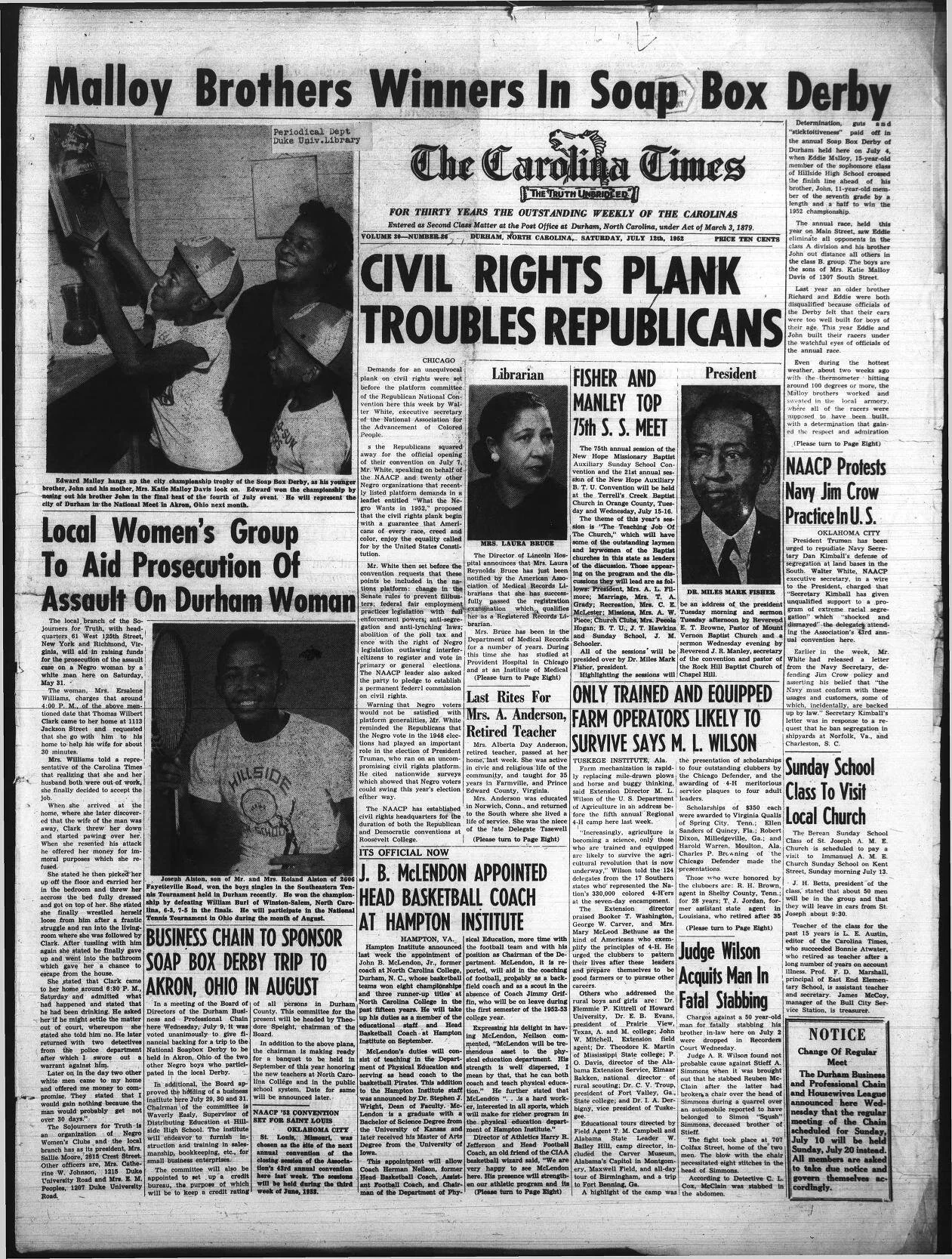
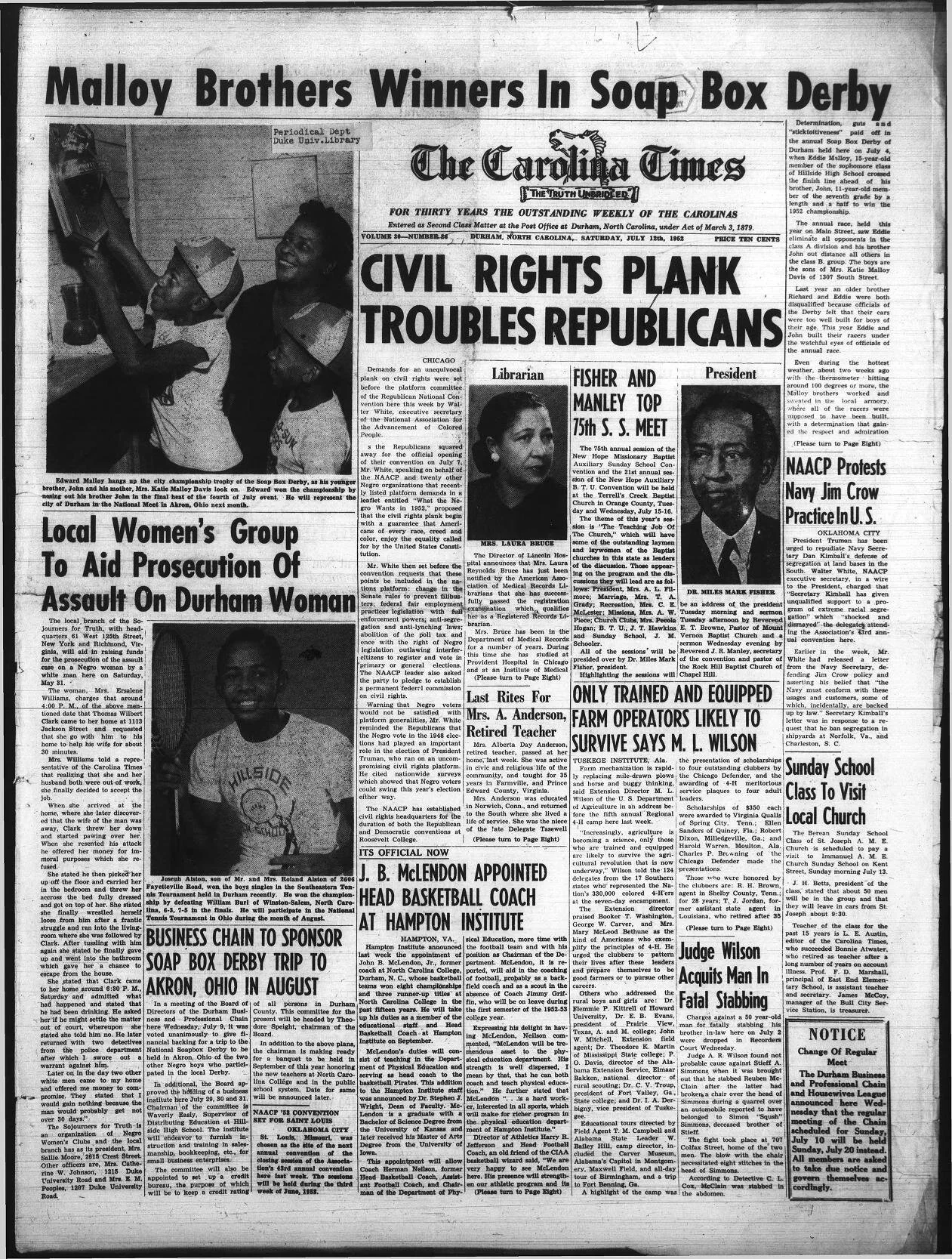
http://newspapers.digitalnc.org/lccn/sn83045120/1952-07-12/ed-1/seq-1/
In 1952 Ersalene Williams, a black woman in Durham searching for work was asked by Thomas Wilbert Clark, a white man, to assist his wife with some household chores. She agreed, but when she arrived, Mr. Clarke's wife was nowhere in sight...
Mr. Clarke pounced on Ms. Williams without warning. When she rejected his "pawing", he offered her money for "immoral purposes" by the press. Ms. Williams, horrified, kicked and screamed, while Mr. Clark dragged her into the bedroom, tossed her on the bed, and got on top of her. During a "frantic struggle", she managed to free herself and escape. Soon after, Mr. Clark appeared at her home to apologize, explaining he had been drinking and could just forget about it. Ms. Williams refused, and Mr. Clark then returned with two white detectives hoping to intimidate her. His plan backfired, and Ms. Williams swore out a warrant for Mr. Clark's arrest. She then said, "Later on in the day, two other white men came to her home and offered me money to compromise. They stated that I would gain nothing because [Clark] would probably [not get more] than 30 days. During the time, Durham's traditional middle/upper-class black male leadership remained silent in the case of the attack on Ersalene Williams. Durham's weekly, The Carolina Times, denounced the black male elite for their silence. Durham's Sojourners for Truth and Justice, a local African American women's group rallied behind Ms. Ersaline in the fight for justice and truth.
The story and assault of Ersaline Williams were all too common for many black women in the south. This type of sexual and racialized violence has plagued our black women for centuries. There is still a struggle to protect black girls and women that shall remain as a priority in black liberation. Unfortunately, black women remain disproprotionately vulnerable to sexual abuse due to intersectionality, the systematic oppression that black women experience based upon the intersection of their race and gender. These institutionalized practices and policies prevent equitable enforcement. The "Strong Black Woman" stereotype, that focuses primarily on uplifting black women through their strength, perseverance, and survival and minimizes their emotional well-being, tenderness, and humanity further promotes silencing the pain of black women and girls.
According to the National Center on Violence Against Women in the Black Community (PDF, 772KB):
For every black woman who reports a rape, at least 15 black women do not report.
One in four black girls will be sexually abused before the age of 18.
One in five black women are survivors of rape.
Thirty-five percent of black women experienced some form of contact sexual violence during their lifetime.
Forty to sixty percent of black women report being subjected to coercive sexual contact by age 18.
Seventeen percent of black women experienced sexual violence other than rape by an intimate partner during their lifetime.
The Institute for Women's Policy Research reports that:
More than 20 percent of black women are raped during their lifetimes — a higher share than among women overall.
Black women were two and a half times more likely to be murdered by men than their white counterparts. And, more than 9 in 10 black female victims knew their killers.
Black women also experience significantly higher rates of psychological abuse — including humiliation, insults, name-calling, and coercive control — than do women overall.
You may ask yourself, What can I Do? Here are some suggestions to start with:
Become an informed ally. Learn about the relationship between colonialism and sexual violence. Read more books by black women scholars who are writing about the lived experiences of black women, including sexual abuse. #CiteBlackWomen is a good start.
Center black women in your advocacy. Contact elected officials. Ask them what they are doing specifically to improve the sexual violence experienced by black women. It may be helpful to explain how institutions contribute to gendered racism. Ask them to reauthorize the Violence Against Women Act.
Support local grassroots organizations that work on behalf of black women in your community. This may require you to do some research, talking with black women, and allowing them to tell you what they need.
Black women should not be forgotten survivors of sexual violence. It's 2020, and it is time that we begin to build capacity in local, regional, and national communities to create sustainable change and end sexual violence against black women everywhere. This story is symbolic of the legacy Durham's African American women have created in the fight for justice. It also highlights the importance of black women's community work and organizing in the Freedom Movement for black folks in America. I'm excited to continue to share more about the history of black women in Durham. If you have more information on Black women from Durham, NC, and would like me to highlight their stories as a part of the Black Women in Bull City project, please fill out the contact form on my website and Let's Connect!
Sources:
NC Newspapers: http://newspapers.digitalnc.org/lccn/sn83045120/1952-07-12/ed-1/seq-1/
NC Digital Heritage Center
Our Separate Ways by Christina Greene: https://www.amazon.com/Our-Separate-Ways-Movement-Carolina-ebook/dp/B001P82APY
https://www.apa.org/pi/about/newsletter/2020/02/black-women-sexual-assault
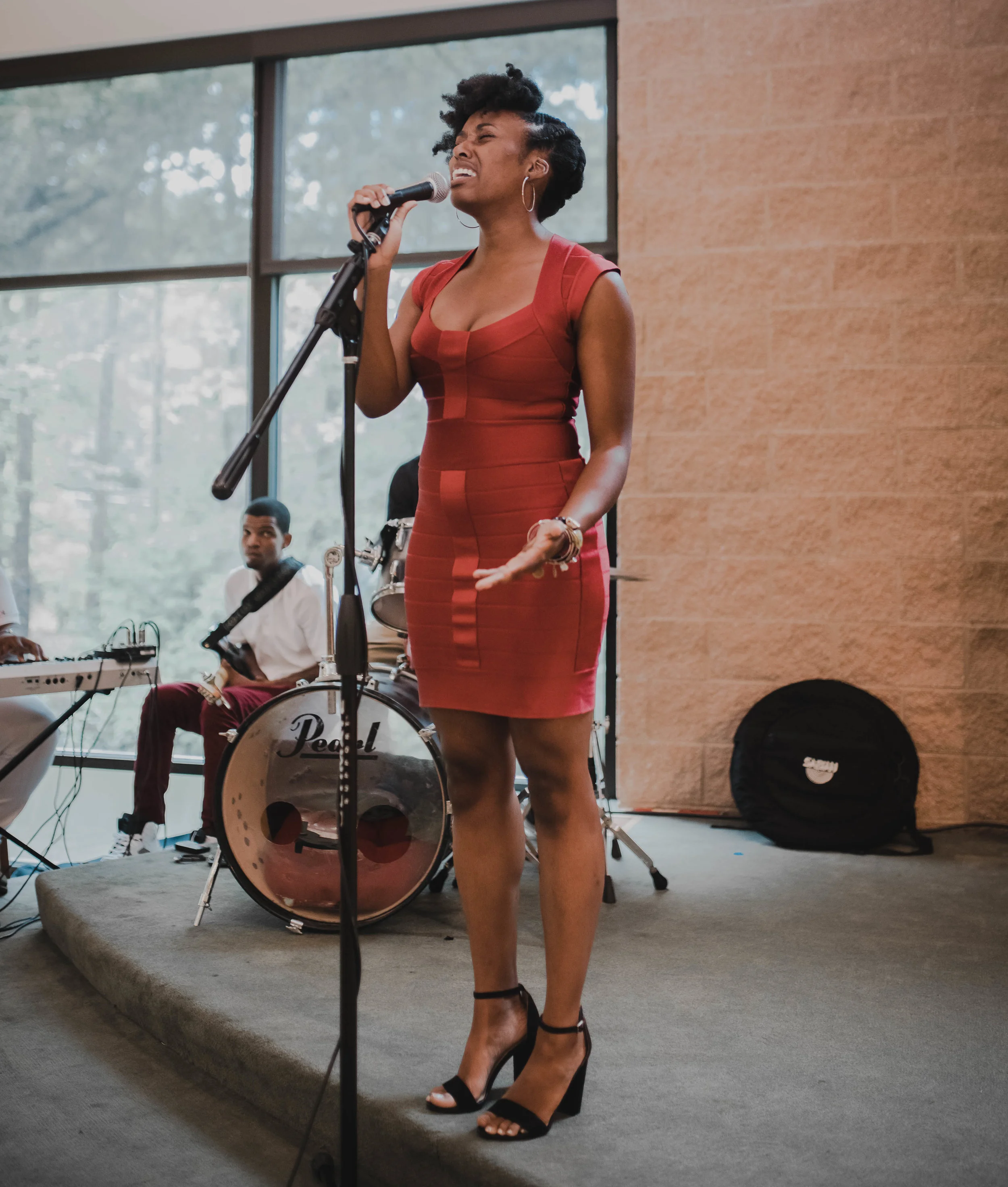
How I Stumbled Into Performing
Today on the blog I share a little bit about my journey performing and when it all began.
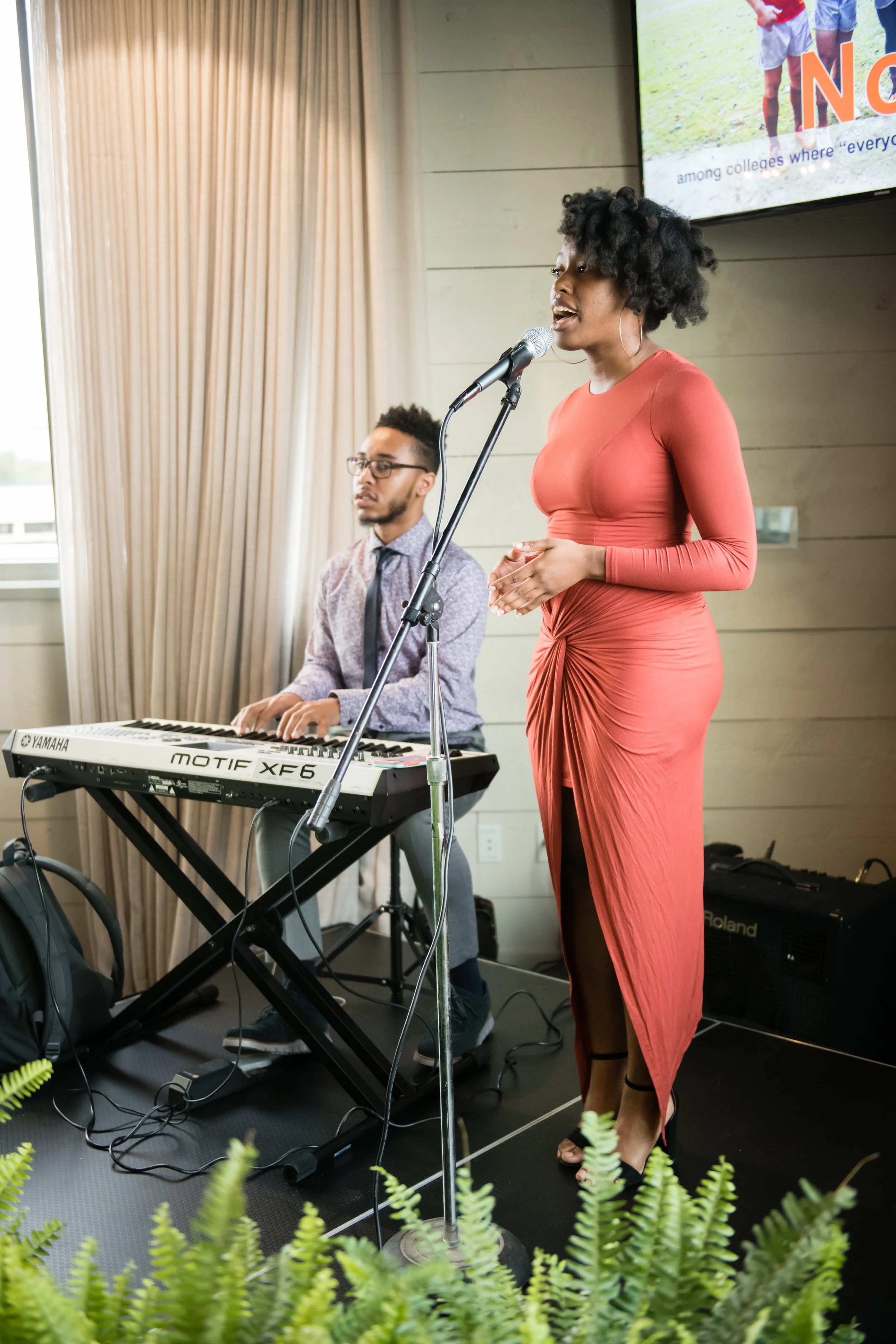
There are lots of events that happen out there: weddings, receptions, Gala’s, awards banquets, and the list goes on. And every time I have the honor of performing at special events it brings me great joy and great responsibility. Music sets the tone and creates the atmosphere and that is what I strive to do when people request my services for their events. But I never anticipated that I would be singing at events and doing nearly half of the things on my musical journey that I have.
You might now be thinking so How did you get into that?
Background: I grew up actually seeing my mom sing, hence the vocals have been passed down from one generation to the next. Occasionally my mom and dad would sing at weddings together sometimes. So there you go, I grew up seeing people perform at weddings and events but at that time I never really sang as a little girl. It’s funny to think that I was actually shy at one point in my life becuase now I’m a total social butterfly! I think my earliest memory of singing was somewhere between age 7 and 9 and my mom had a friend over and asked me to sing and I went to the next room and hid behind the weil and sang.
How cute right?…
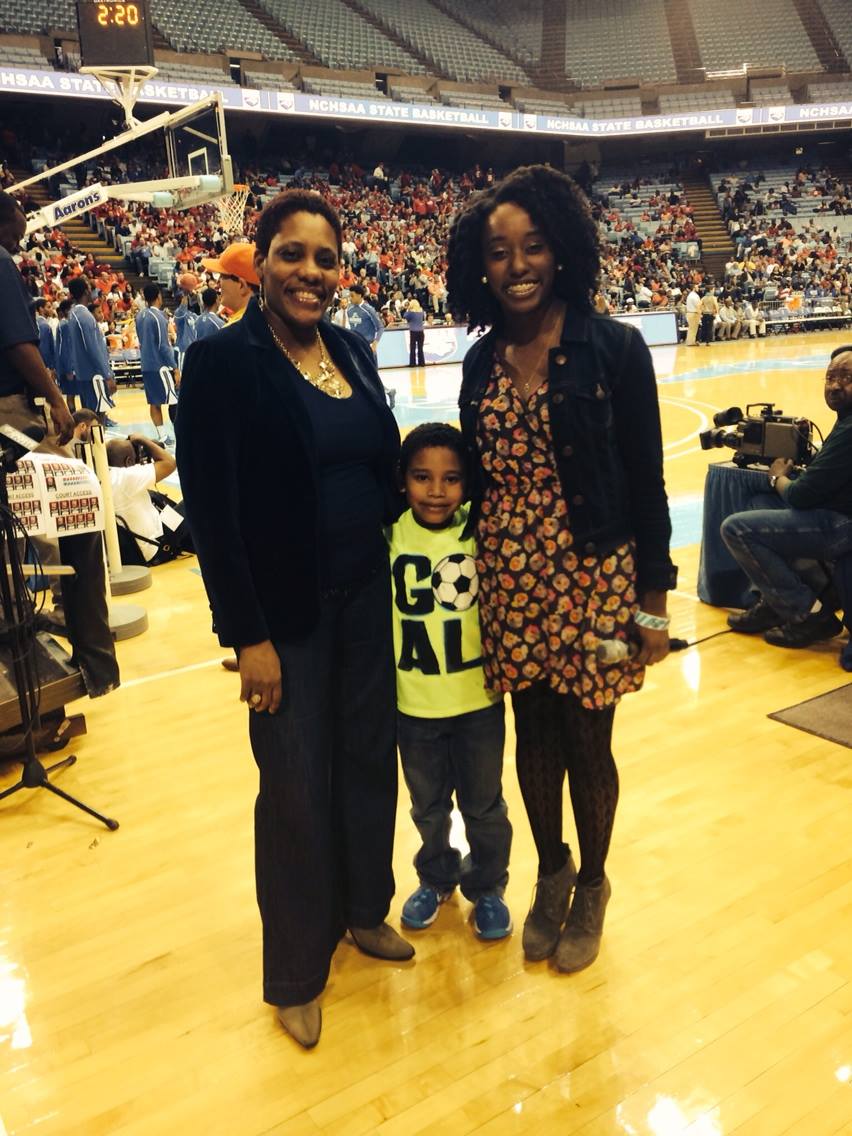
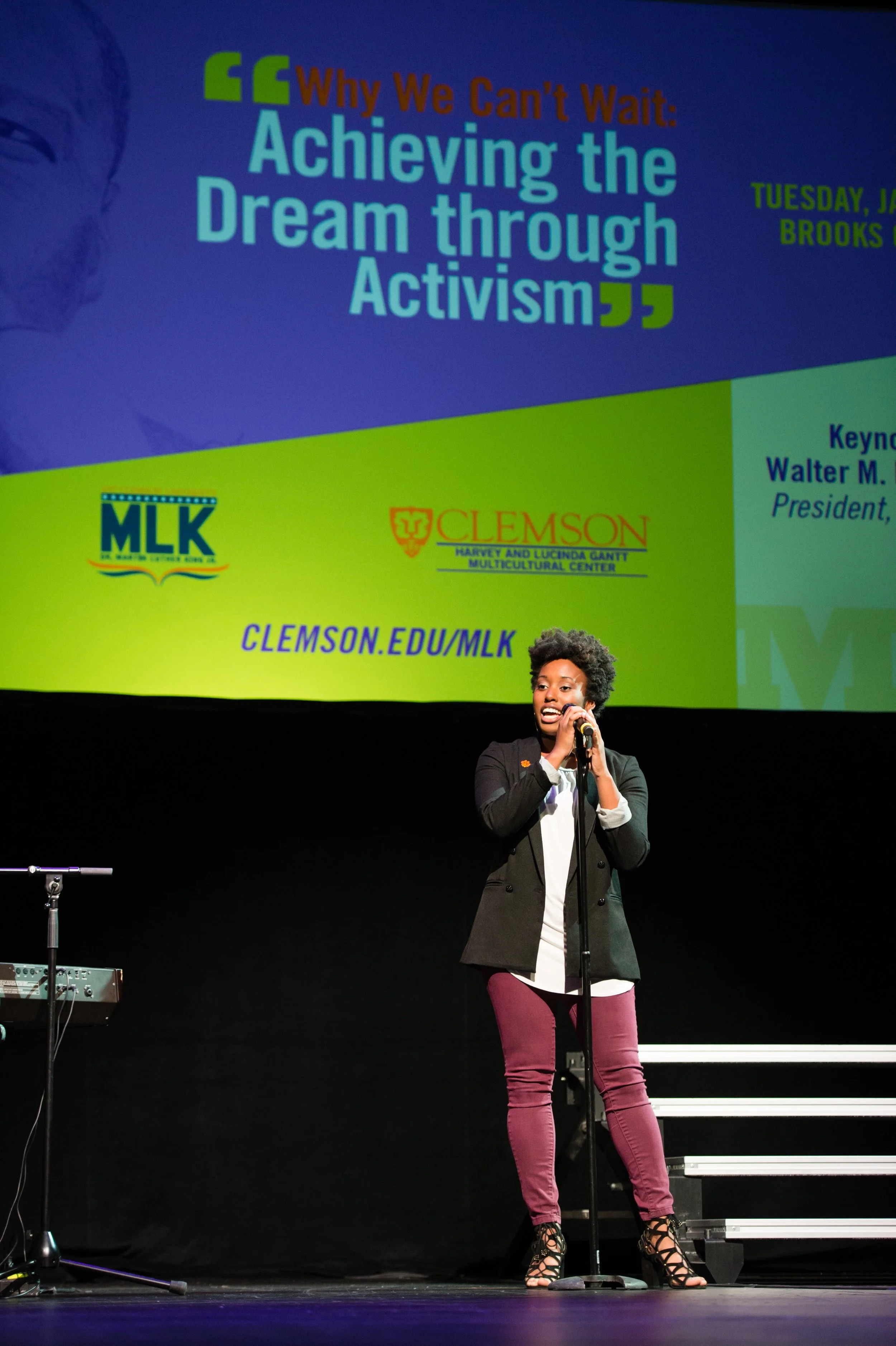
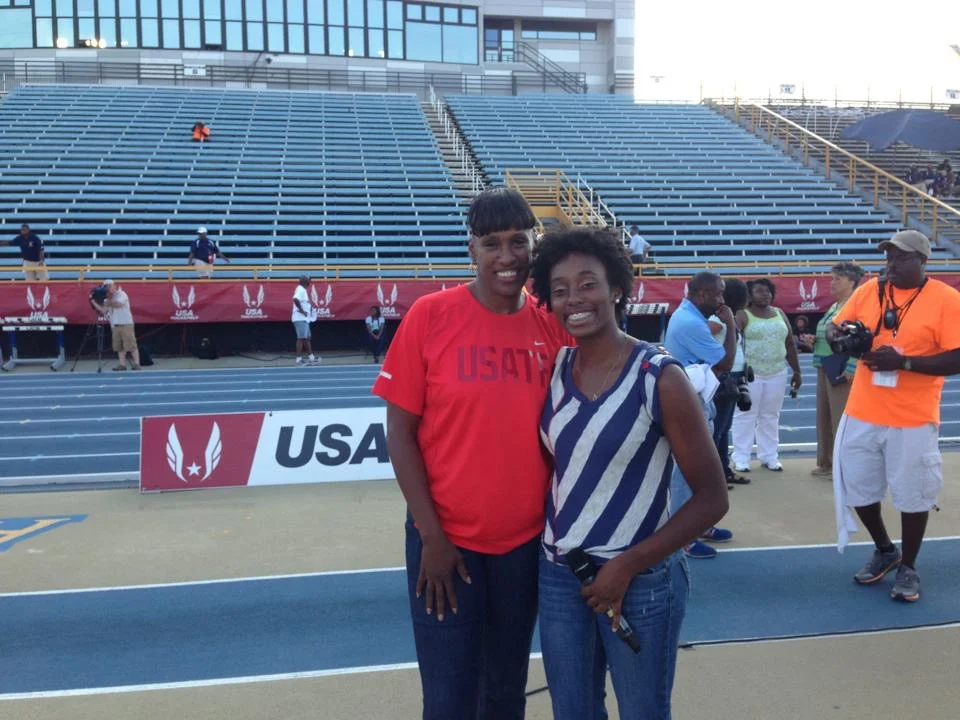
Fast forward all these years later and I’m doing the same thing. Performing at weddings, private events, birthday parties helps me really strengthen my performance muscles which can always use improvement. I remember when I was in high school, my principal said that I was now going to be singing the anthem on Friday nights for the football games (Spartan Nation! ). That was the beginning of that journey outside of church. As I continued to sing under the Friday Night Lights I was then asked to perform the anthem for the 2014 NCHSAA Mens Basketball State Championship. Not only did I perform solo but briefly I would perform as a vocalist for the Southern Groove jazz band headed by Mr. Leonardo Williams. One of my happiest moments prior to college was singing at the USA Youth Track and Field Nationals for the opening ceremonies and I had the honor of meeting one of my heroes, Jackie Joyner Kersee!!!
I carried on singing while in college singing at several NCAA Men’s Basketball Games for Clemson and other events across campus and that led to me being invited to sing before the Board of Trustees at Clemson, the National Men of Color
Summit hosted by Clemson two years in a row., and the Annual MLK Celebration. What an incredible journey I’ve had and can’t wait for continued growth and opportunity. I’m thankful for all the people who have been instrumental in my journey. I’ve always know I wanted to perform but haven’t always felt confident in knowing what my next step should be but I remember a quote from Oprah that really has stuck with me and she says…
"The way through the challenge is to get still and ask yourself, 'What is the next right move?' Not think about, 'Ooh, I got all of this to figure out.' What is the next right move? And then from that space, make the next right move and the next right move ... then you won't be overwhelmed by it, because you know your life is bigger than that one moment."
In pursuing something that I love and enjoy so much using that advice has been apart of what keeps me grounded even when I start to feel overwhelmed. Beyond college I have performed in some really interesting places and spaces from Open Mics in Charlotte, NC and radio stations in Zimbabwe ( more about this story later)…
My most recent opportunity was a wedding in NC watch on my Youtube. I collaborated with musicians from Raleigh/Durham to perform for a couple’s beautiful wedding day . Zakiya + Joseph had a beautiful ceremony, pure and serene and I’m so thankful that she chose me to be apart of her big day as the live music. One thing that I thought made her ceremony special is that it was an unplugged ceremony so people weren’t distracted by their phones and could be fully present for the different aspects of the ceremony including the music. Bride’s are typically stressed and worried about everything running perfectly but she shared that the music brought her a sense of peace. Check out some of my performance below!
I’ll be sharing more about my performance, upcoming performances and just my experience all around being a performer. Stay tuned for more good stuff!
for Bookings: charityshaw13@gmail.com
Surviving My First Week of Grad School + Labor Day Weekend
I SURVIVED.
Preparing for my first week of grad school had absolutely no organization. My biggest concern was to at least look over the syllabus for each class, make to each one on time, and complete any assignments that were due (IF ANY) before the first of day of class. I think it’s a bit weird how we started school the week right before a holiday and midweek on a Wednesday. Anyhow, after waking up at 6am three days in a row and my days ending by five I was like did I really sign up for this!?
The answer is yes I did and for a moment I began to feel overwhelmed and feel that I wasn’t capable, but that was that voice of doubt that was trying to creep into my head already right at the beginning. Right at the beginning of what is supposed to be a journey of growth and newness, I was almost going to allow those voices of “ Nah, this ain’t it for you.” But I didn’t allow and I said to myself that I would pause, take a deep breathe and spend time after hanging and celebrating for my girls birthday weekend to have some clarity and organize my schedule and class responsibilities. These are the moments where I realize I can’t let the transitions in my life completely throw me. I decided that I was going to take IT and not let IT take me. I’m actually really excited about my program and all of the wonderful things I am going to learn. As the semester goes on I will be sharing more and more tips about how I ensure that stay productive and have a balance between school music, and other creative endeavors. I will also be sharing how I ended up at Emory and a little bit more about my journey to Emory University.
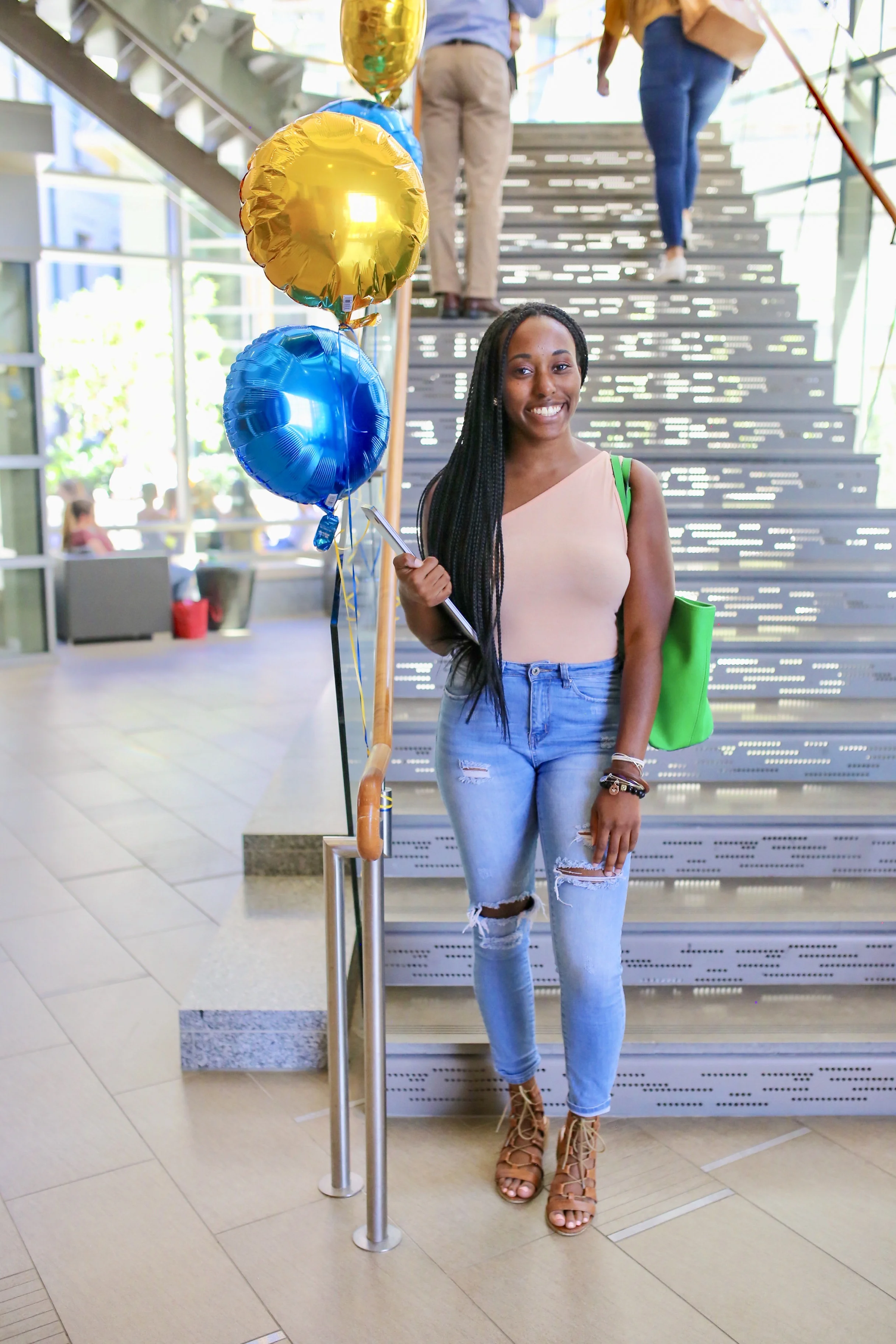
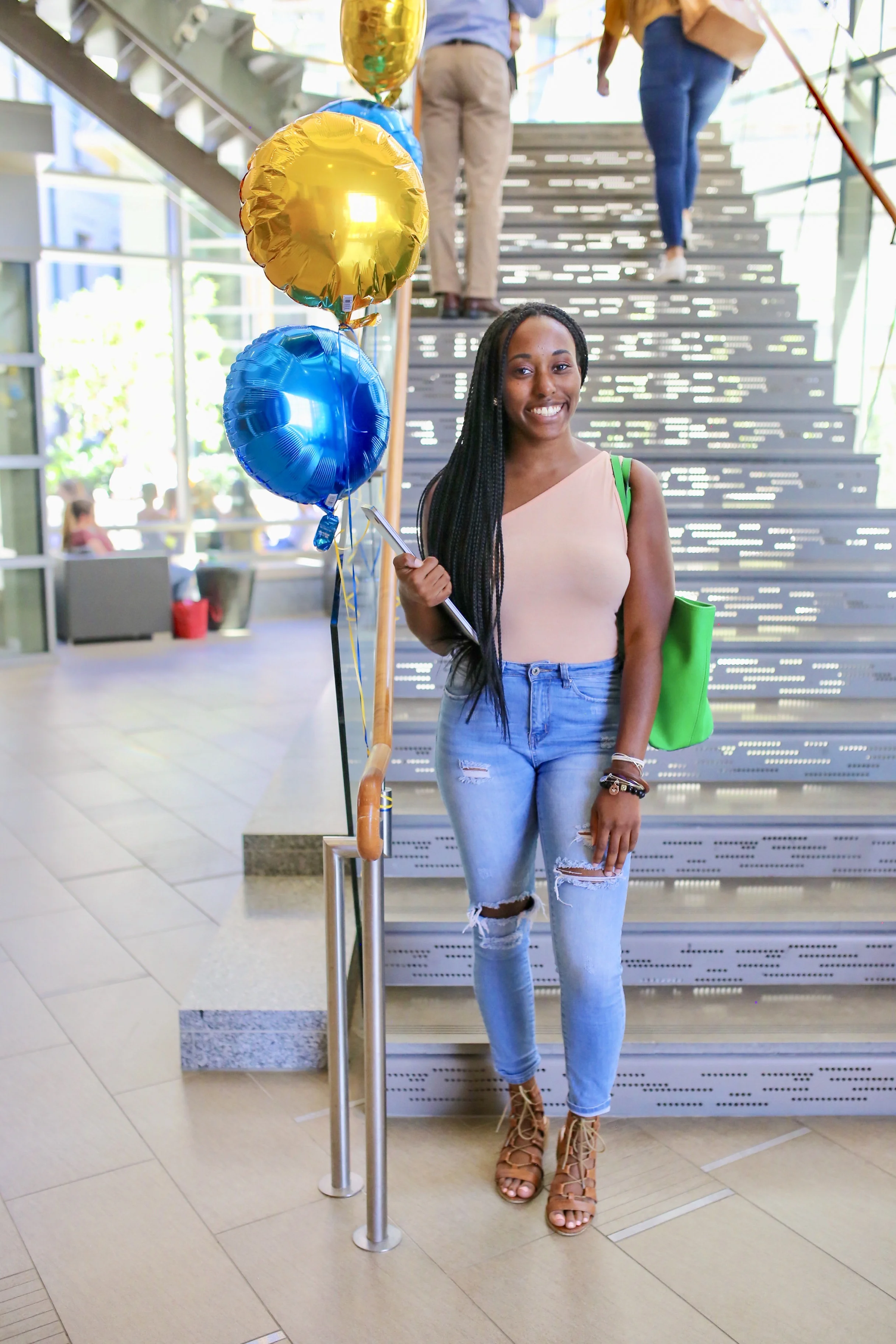
INSTEAD, of stressing about all of the assignments and readings and whatever else I had in school, I decided to not overwhelm myself. I could have easily cancelled plans to focus all of my energy on that, but instead I said you have the time you just need to use it wisely. Check out my first day of school pics!
Sooo… One of my best friends from Clemson’s birthday was this weekend and so I was really grateful to have the necessary girl time that every hardworking girl boss needs.
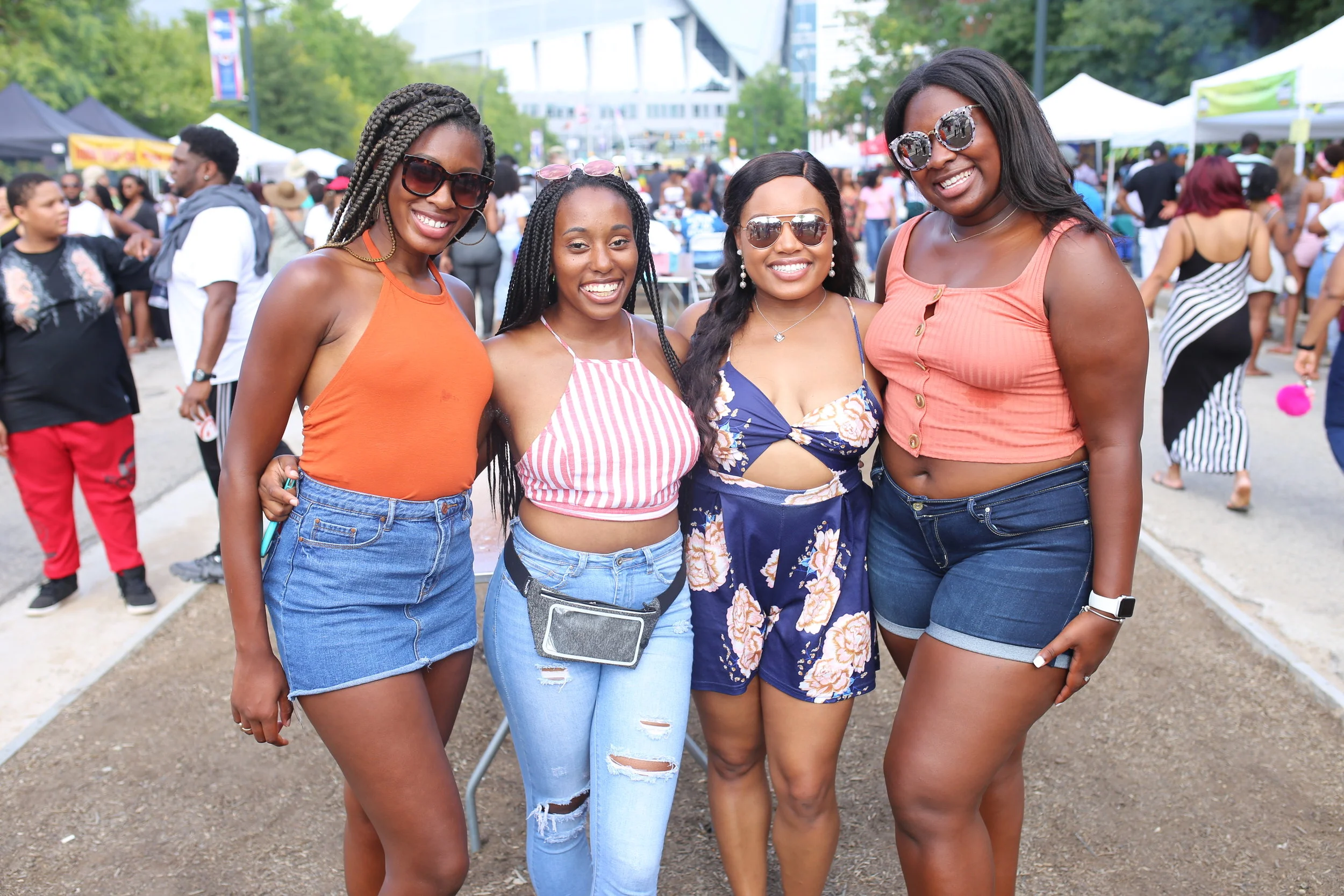
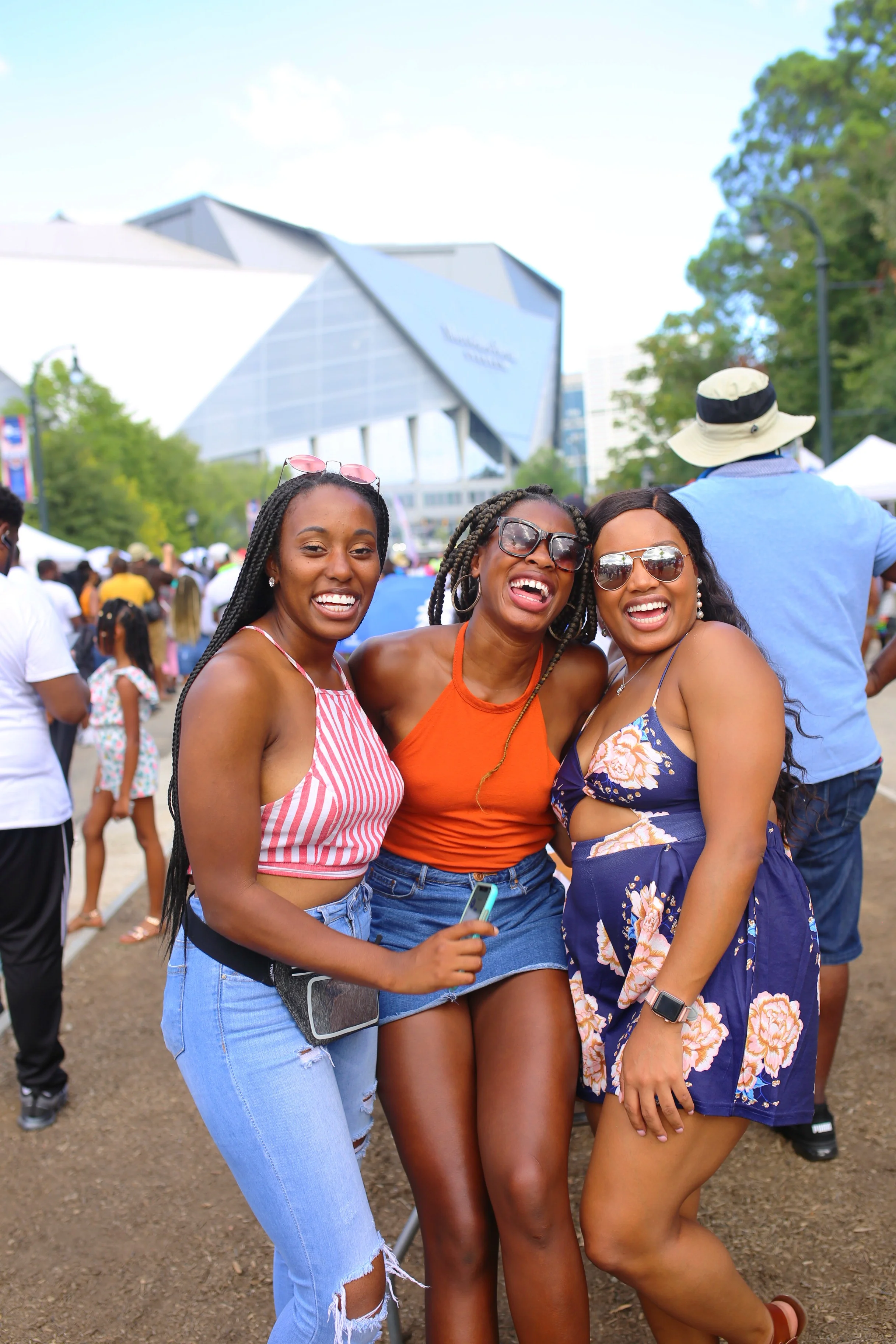
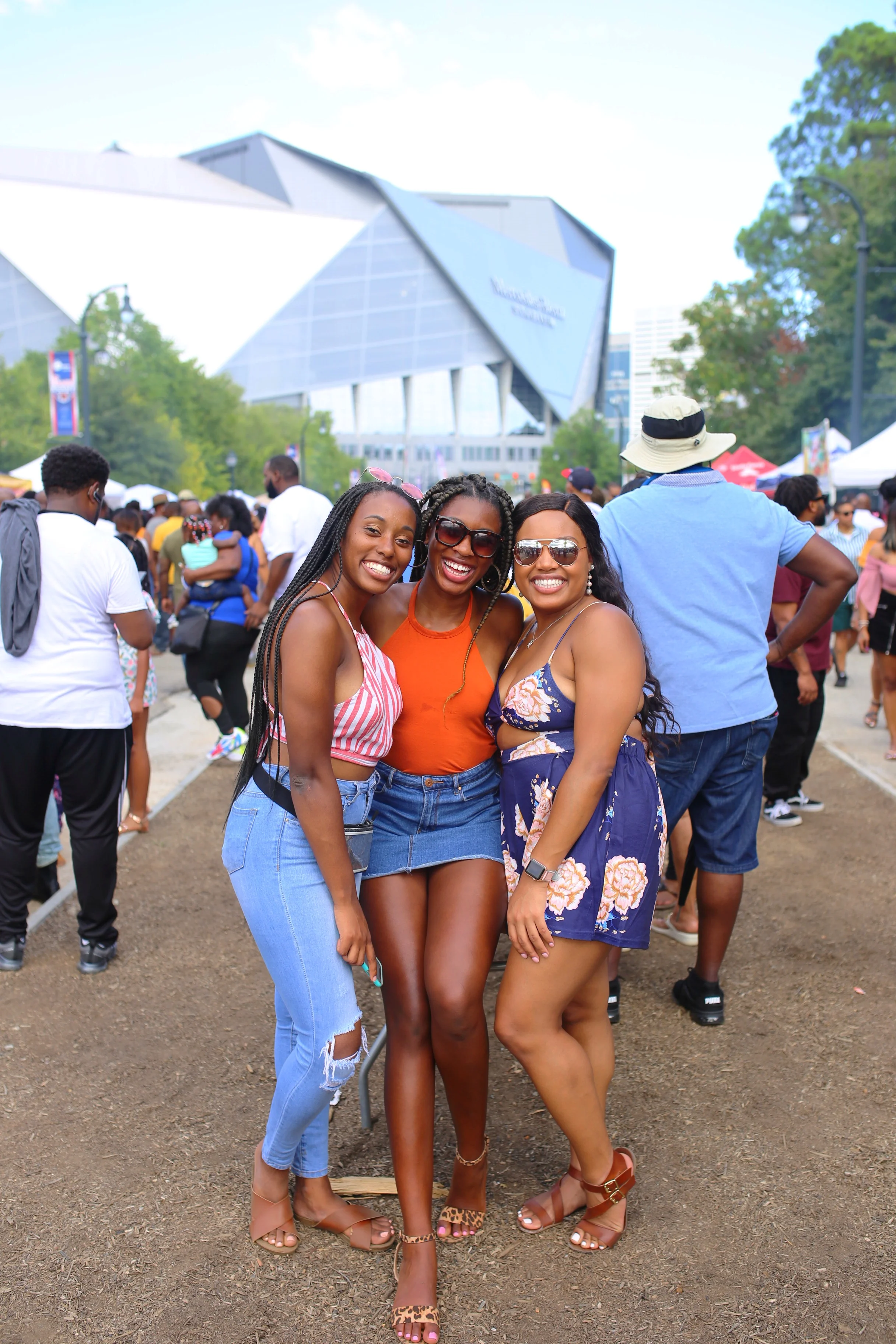
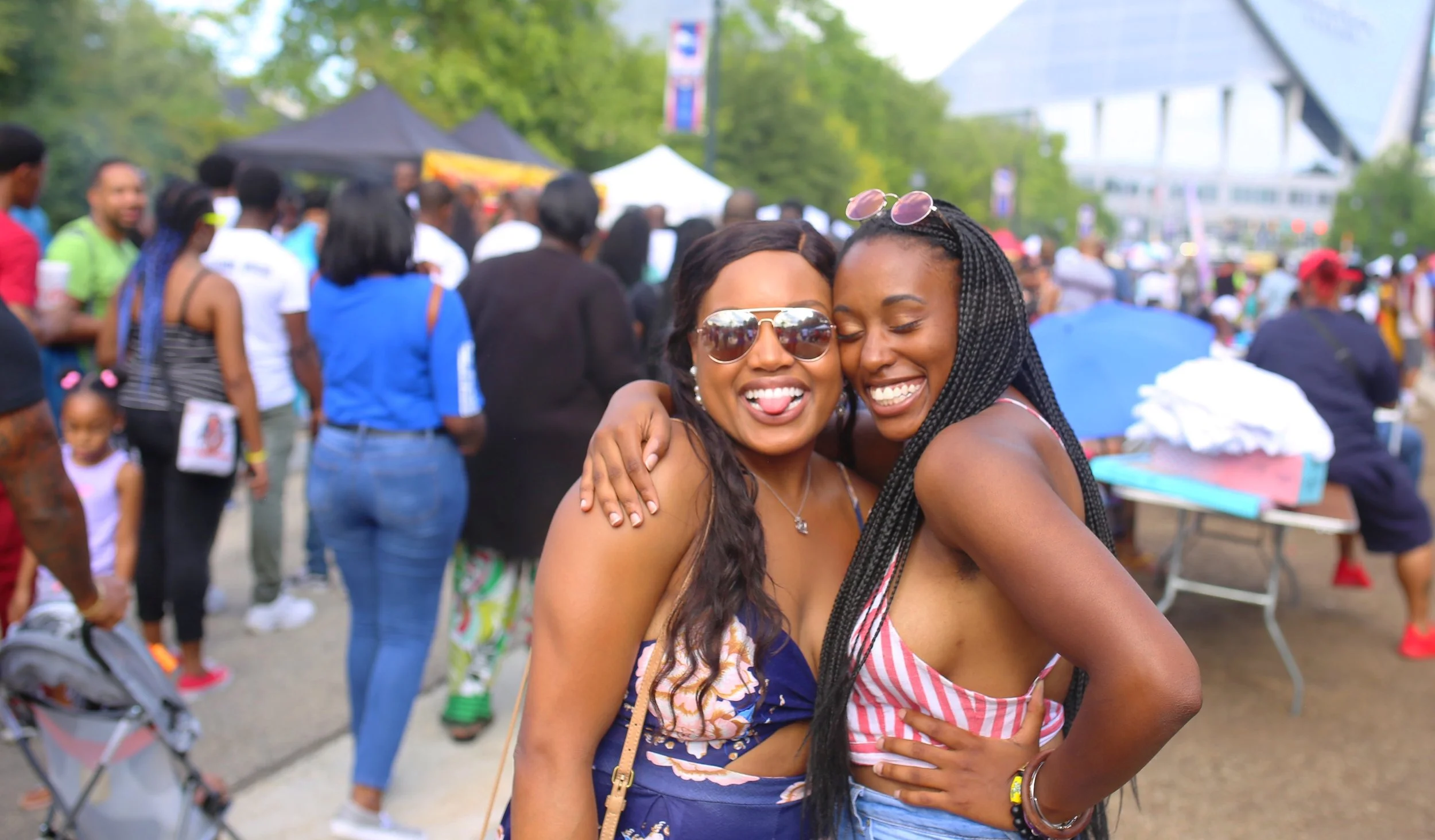
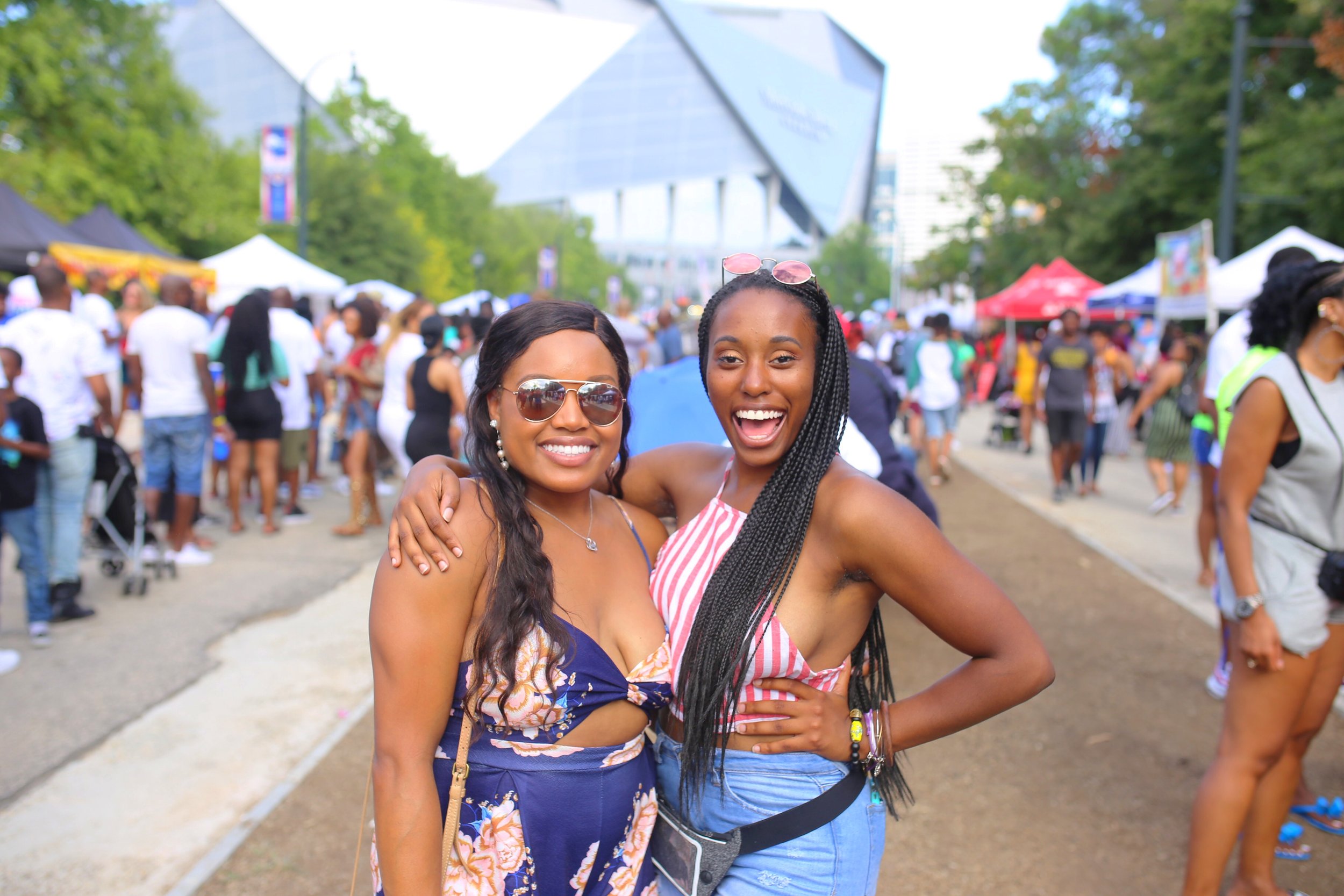
We took a nice run around the amazing Ponce City Market and then afterwards we headed over to the Market to grab smoothies and Acai Bowls for Brunch/Breakfast. Afterwards we hit up the Taste of Soul Atlanta Festival and although it was a great opportunity to try new food we were having so much fun and being LIT that we ended up going to Chick-Fil-a to grab a bite to eat after 3 changes in LYFT drivers and having to walk from my apartment gate to my place. We briefly took a break afterwards and later headed to the Grand Lux restaurant for my friend’s birthday dinner and lets just say after all of the sun and walking we had prior, we were too beat to go out on the town so we ended the night there.
After this week I’m so grateful for sisterhood and love with the women that I journeyed through college with. It was refreshing and also uplifting for me as I embark on my new chapter as a graduate student and as girls who has ALOT of other interests. Check out more pics from the weekend below!
Cheers to a new week and LOTS OF PRODUCTIVITY! Can’t wait to share more with you about the exciting things I’m currently working on as well as all the growth I’m experiencing right now in my life!
Peace, Love, and Light.